 How-to
7 Essential Steps to Plan a Kids Birthday Party
Last Updated: November 7, 2026
Quick Summary
To plan a kids birthday party, start with the guest list, age range, and party size, then set the date, time, and duration before building a realistic budget. Book rentals early, choose a simple theme, send invitations at least three weeks out, and match activities to each age group.
- A Party Genius AI analysis of 6,713 party plans found a median party size of 40 guests, including 9 children, lasting 3 hours.
- A good rule is one guest per year of age for kids under 8, plus siblings.
- Two-hour parties work well for toddlers, while three hours suits ages 5 to 8.
- Send invitations at least three weeks out and set the RSVP date a full week before the party.
- Book rentals as early as you can, since weekend dates tend to fill first.
Table of Contents
- Start With the Guest List, Age Range, and Party Size
- Set the Date, Time, and Party Duration
- Build a Realistic Party Budget Before You Book Anything
- How to Plan a Kids Birthday Party at Home
- Pick a Theme and Send Invitations With a Clear RSVP Date
- Kids Birthday Party Activities That Fit the Age Range
- Your Kids Birthday Party Checklist and Planning Template
- Book Your Inflatables and Party Rentals Early
- Frequently Asked Questions
Start With the Guest List, Age Range, and Party Size
Learning how to plan a kids birthday party starts with three numbers: how many guests, what ages, and how long. Get those right and every other decision gets easier.
A Party Genius AI analysis of 6,713 party plans found a median party size of 40 guests, including 9 children, lasting 3 hours. That is a bigger crowd than most parents expect.
So build your list in two columns:
- Kids: the birthday child's friends, cousins, classmates
- Adults: parents who stay, grandparents, family friends
Then set a hard cap. A good rule is one guest per year of age for kids under 8, plus siblings. For a 6-year-old, that means about 6 to 8 kids.
Age range matters just as much. A party mixing 3-year-olds with 8-year-olds needs two activity zones, not one. Toddlers need soft play and short bursts.
Set the Date, Time, and Party Duration
Pick the time around your child's best mood, not your own schedule. Most 4-to-8-year-olds are happiest mid-morning or right after nap.
Two-hour parties work well for toddlers. Three hours suits ages 5 to 8. Anything longer and you will see meltdowns before the cake.
Weekend slots book fastest, so lock your date before you call any vendor.
Also check for conflicts:
- School events and sports games
- Other classmates' parties on the same day
- Holidays and long weekends
One more thing. A Chuck E. Cheese survey of 4,985 parents found that families planning more than four weeks ahead skewed toward elaborate celebrations, while last-minute planners skewed simple. Decide which camp you are in before you set the date.
Build a Realistic Party Budget Before You Book Anything
Set your total budget first, then split it into buckets. Most parents work backward from the venue and run out of money for food.
Here is one way to divide it:
| Category | Share of Budget | What It Covers |
|---|---|---|
| Venue or rentals | 30-40% | Inflatables, tables, chairs, canopy |
| Food and drinks | 20-25% | Pizza, snacks, juice, water |
| Cake and dessert | 10% | Cake, ice cream, candles |
| Decorations and supplies | 10-15% | Plates, cups, tablecloths, utensils |
| Favors and extras | 10% | Goody bags, small gifts |
| Backup fund | 5-10% | Surprise costs, extra ice, tip |
Share of Budget
To turn those shares into real numbers, work per guest.
Prioritize in this order when the total runs over:
- Safety and supervision first. Never cut the adult-to-child ratio, shade, or a safe play surface to save money.
- Food and cake second. Kids remember the cake. Cut the number of snack courses before you cut the cake.
- Rentals third. One well-chosen inflatable or activity beats three marginal add-ons.
- Favors and decor last. These are the easiest to trim and the least missed.
Save money by hosting at home and renting only what you need. Skip the party favor bags and let kids take home a craft instead.
Track every line item as an actual number, not a category, so you can see the total move in real time.
Watch out: putting a deposit down before you have counted the full cost of food, cake, and supplies. That is how budgets break.
How to Plan a Kids Birthday Party at Home
A home party is the cheapest option and the easiest to control. It also needs the most planning. How to plan a kids birthday party at home comes down to three zones: play, food, and quiet.
Set up the yard or garage as the play zone. Keep the kitchen table as the food zone. Use a bedroom as the calm-down space for any child who needs a break.
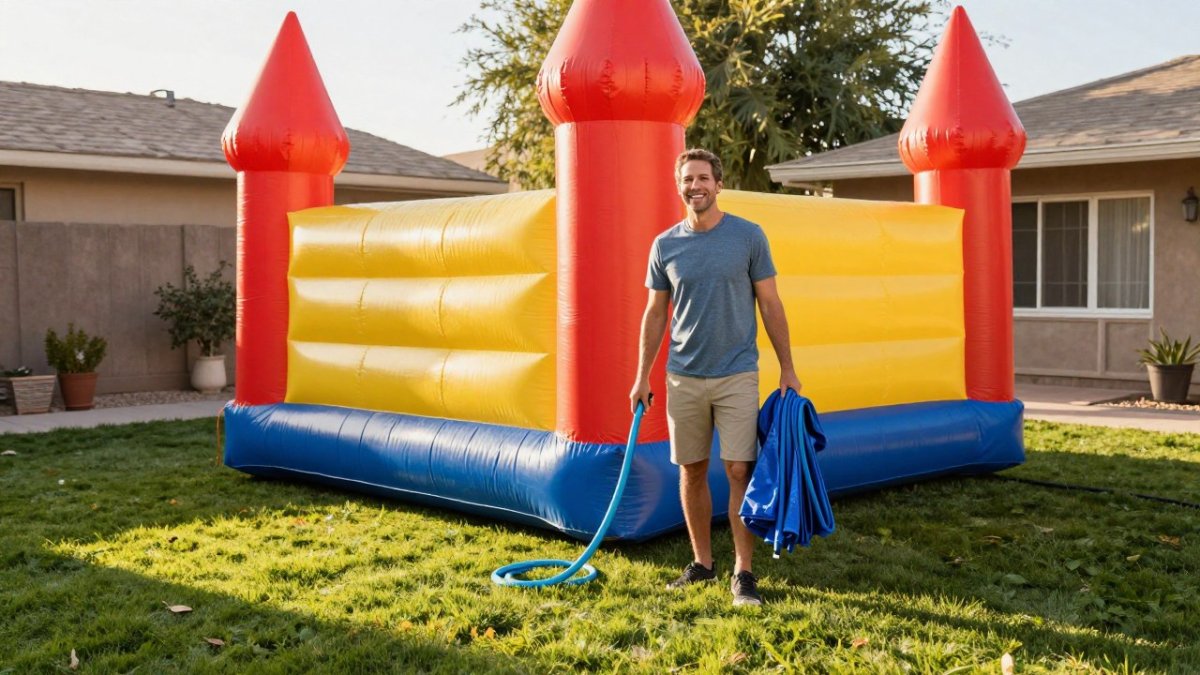
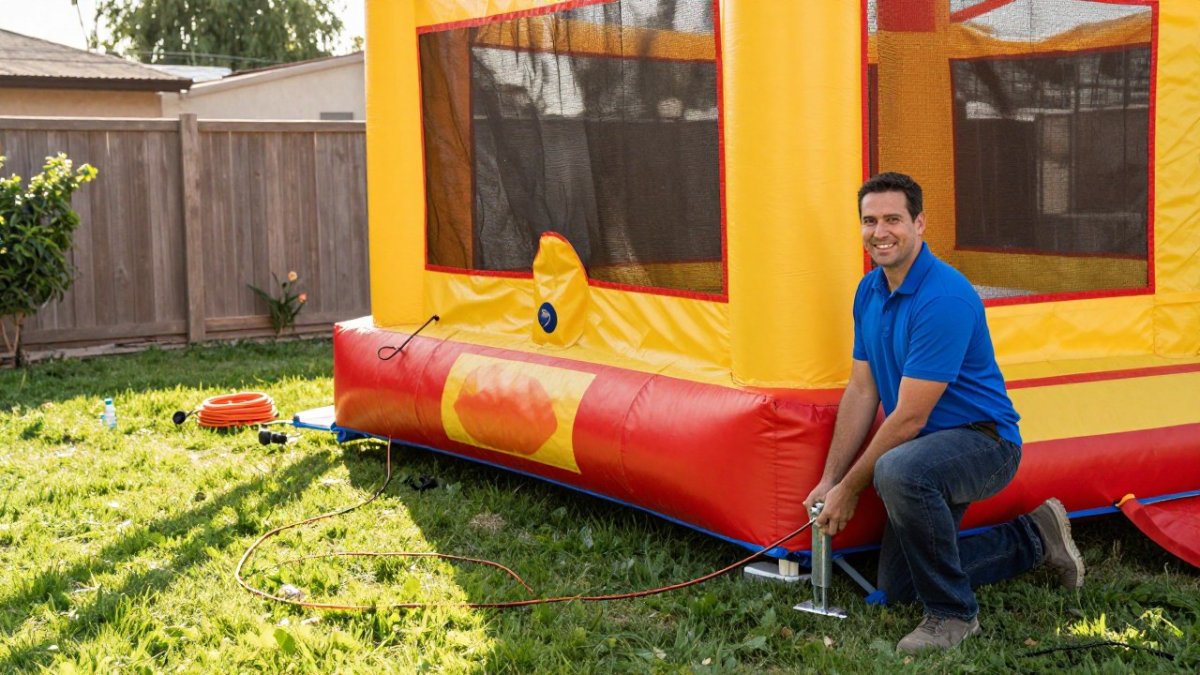
Before you set up any inflatable in your yard, run through a bounce house safety checklist. Check the ground for rocks and roots, keep the blower cord away from walkways, and set clear rules before the first kid climbs in.
Choosing the Venue or Location: Backyard, Park, or Party Room
Backyards win on cost and flexibility. Parks are free but often have no shade and no power. Party rooms cost more but come with setup, cleanup, and bathrooms handled.
Ask these questions before you commit:
- Is there shade or covered space?
- Is parking close enough for parents carrying gifts and kids?
- Are there bathrooms on site?
- Is power available for inflatables or a cooler?
- What is the rain plan?
If the answer to the last one is "we'll figure it out," pick a different spot.
Pick a Theme and Send Invitations With a Clear RSVP Date
Choose a theme your child actually asks for, not the one you saw online. A simple theme is easier to execute and cheaper to decorate.
A 2026 River Region Parents party-planning article describes a shift toward focusing decorations on one photo area instead of decorating the whole house. Pick one wall or one backdrop. That is where the photos happen anyway.
Send invitations at least three weeks out. Include:
- Date, start time, and end time
- Address and parking notes
- RSVP date and your phone number
- Whether parents should stay
- Any food allergies you should know about
- What to wear, if it involves water or inflatables
Set the RSVP date a full week before the party. That gives you time to buy food and confirm rentals.
Kids Birthday Party Activities That Fit the Age Range
Match activities to age and the party runs itself. Mismatch them and you spend the whole party redirecting kids.
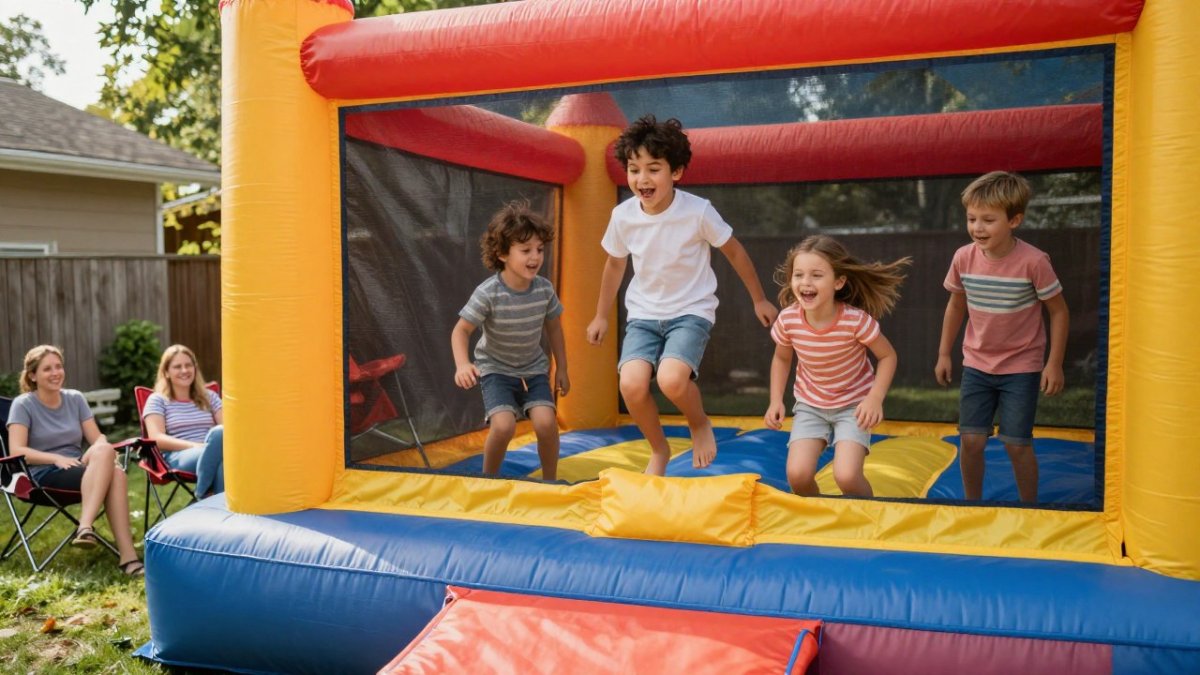
Ages 2 to 3. Keep the party to about 90 minutes to two hours. Plan free play, a bubble station, and one simple craft. Keep each activity to 10 to 15 minutes and expect to abandon any plan that is not working.
Ages 4 to 5. Two hours works well. Plan free play, one structured game, a craft, food, and cake. Keep each activity to 15 minutes.
Ages 6 to 8. Two to three hours. Add structure: relay races, obstacle courses, and team games land well. So does anything with a timer. Plan a clear flow: arrival free play, one active game block, food, cake, gifts, then free play until pickup.
Ages 9 and up. Three hours or more. Older kids want games with rules and a score, plus unstructured time to hang out. Give them a choice of two activities rather than a single directed schedule.
For mixed-age groups, set up two zones rather than one. A soft-play or craft zone for younger kids and an active zone for older ones lets each group self-select. Assign one adult to each zone so supervision does not drift.
Sensory and inclusion planning. Some children need a quieter option.
A Chuck E. Cheese guide on what kids want at parties advises starting with activities and the guest list, especially as children get older, before focusing on themes and decorations.
Need more ideas? Read our guide on how to keep kids entertained at a birthday party for games that work with mixed ages.
The Kids Quest Museum guidance on successful birthday parties makes a good point: a party does not need a tightly directed schedule to succeed.
Watch out: planning back-to-back activities with no buffer.
Your Kids Birthday Party Checklist and Planning Template
A kids birthday party checklist keeps you from forgetting the small stuff. Work through it top to bottom.
Four weeks out
- Set the guest list and age range
- Pick the date and time
- Set the budget
- Book inflatables and rentals
- Choose the theme
Two weeks out
- Send invitations with an RSVP date
- Order the cake
- Plan the food and drinks
- Buy plates, cups, tablecloths, and utensils
- Plan activities by age group
One week out
- Confirm RSVPs and final headcount
- Confirm rental delivery time
- Buy favors and prizes
- Charge cameras and phones
- Write out the party flow
Day before
- Clean the party space
- Prep make-ahead food
- Set out decorations
- Charge the blower and check the yard
Day of
- Pick up the cake
- Set up food and drink stations
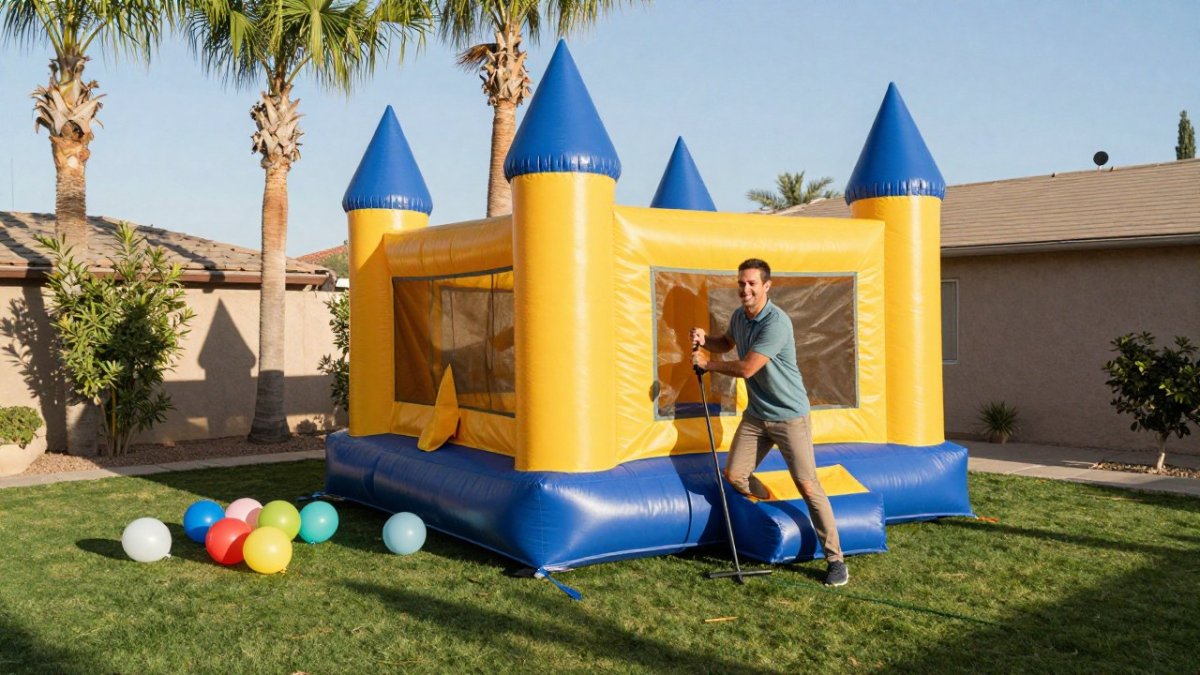
- Greet the rental crew and show them the setup spot
- Assign one adult to photos and one to the gift table
- Do a final safety walk-through
Using a Kids Birthday Party Planning Template
A kids birthday party planning template turns this list into a working document. Build one in a spreadsheet with four tabs: guests, budget, timeline, and shopping.
Track RSVPs in the guest tab with columns for name, age, parent contact, allergies, and confirmed yes or no. In the budget tab, list every line item next to its actual cost so you can see the total move in real time.
The timeline tab is your party flow. Write it in 15-minute blocks: arrival and free play, activities, food, cake, gifts, pickup. Print it and tape it to the fridge.
Book Your Inflatables and Party Rentals Early
Book rentals as early as you can. Weekend dates tend to fill first, and last-minute bookings can limit your options.
Decide what you need before you call:
- Bounce house or combo unit
- Water slide, if it is a warm-weather party
- Tables and chairs for food and gifts
- Canopy for shade
- Concessions like a popcorn or cotton candy machine
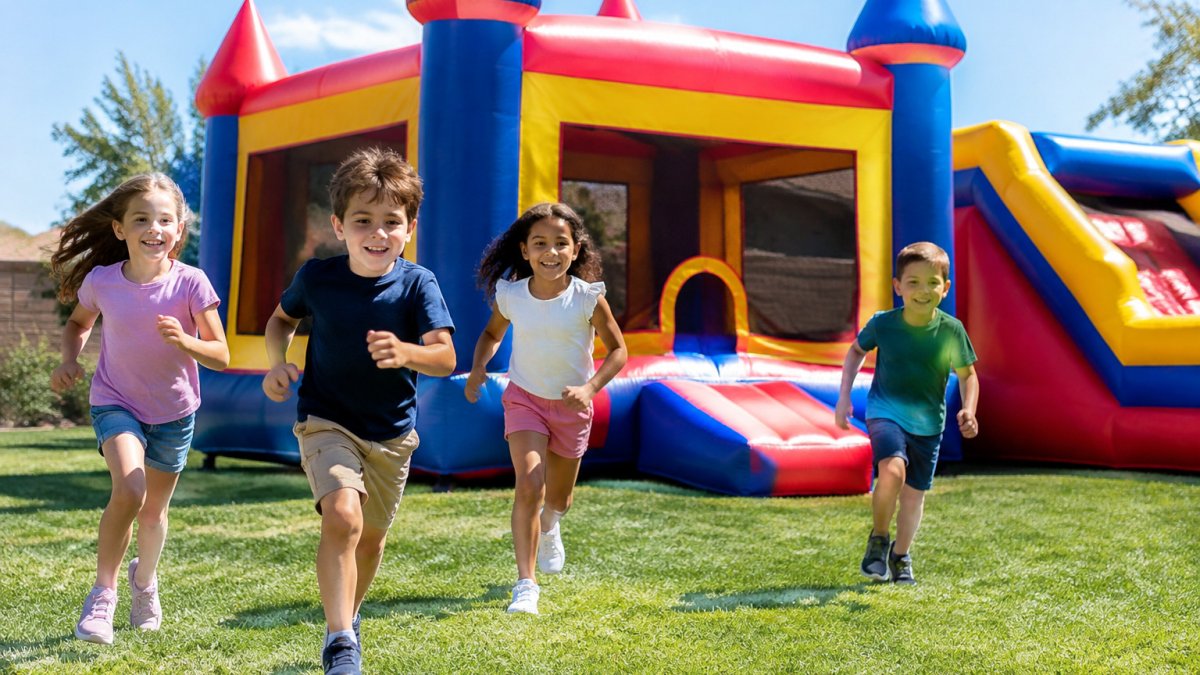
You can browse the full bounce house rentals and slides for Avondale parties to see sizes side by side. If you are unsure how delivery day works, read our walkthrough on how to set up a bounce house delivery day so you know what to expect. And if you are still narrowing down options, our birthday party rentals for kids guide covers how to match unit size to age group.
Watch out: booking the inflatable without confirming the drop-off window can leave the unit sitting in your yard for hours before the party.
Planning a kids birthday party should not eat your whole month. The parents who enjoy the day are the ones who locked the guest list, budget, and rentals early and left room for free play. Lil Bubs Bounce House offers safe, clean inflatables, water slides, and obstacle courses, along with tables, chairs, canopies, and concessions. Book online to reserve your equipment for your next gathering.
Frequently Asked Questions
How far in advance should you plan a kids birthday party?
Start about four to six weeks ahead for a comfortable pace. Booking rentals, sending invitations, and confirming the guest list all benefit from that runway. If you are planning a kids birthday party at home, add a week for setup logistics like tables, canopies, and inflatables.
How long should a kids birthday party last?
Three hours is a solid default. For ages 4 to 8, keep the structured portion short and leave room for free play, since children can make their own good time without a tightly directed schedule.
What activities are good for a kids birthday party at home?
Plan two or three anchor activities rather than a full itinerary. Inflatables, water slides, and obstacle courses work well because they absorb energy and suit a wide age range. Add a craft table, a themed game, and free play. Start with activities and the guest list, especially as children get older, before focusing on themes and decorations. Keep a backup indoor activity in case of rain.
How many children should you invite to a kids birthday party?
A common rule is one guest per year of age for younger children, then expand as they get older. A group of about 9 children per party fits well for ages 4 to 8. Confirm your venue or rental capacity first, then build the guest list. Fewer guests means less supervision pressure, easier food planning, and a party flow that stays manageable for the host.