 blog
Which Features Matter Most in a Wet or Dry Bounce House?
Last Updated: November 4, 2026
Quick Summary
The five features that matter most in a wet or dry bounce house combo are bounce area and play zones, attached slide options, splash pool and water play, built-in safety features and supervision, and extra play elements like climbing walls and hoops. Match the floor size to how many kids will use it at once, and choose wet use only when the weather is warm and water drainage is available.
- Match the bounce floor size to the number of kids playing at once, not total guests.
- Gentler slides suit younger kids, while steeper slides suit older kids.
- Wet use requires a hose connection and a planned runoff path before booking.
- Choose a dry combo for mild, windy, or rainy weather or same-evening returns.
- Adult supervision matters more than any single safety feature on the unit.
Table of Contents
- What a Wet or Dry Bounce House Combo Includes
- Feature 1: Bounce Area and Play Zones
- Feature 2: Attached Slide Options
- Feature 3: Splash Pool and Water Play
- Feature 4: Built-In Safety Features and Supervision
- Feature 5: Extra Play Elements Like Climbing Walls and Hoops
- Wet vs Dry Bounce House: Choosing Based on Your Event
- Setup Space Requirements and Booking Your Combo Rental
- Frequently Asked Questions
What a Wet or Dry Bounce House Combo Includes
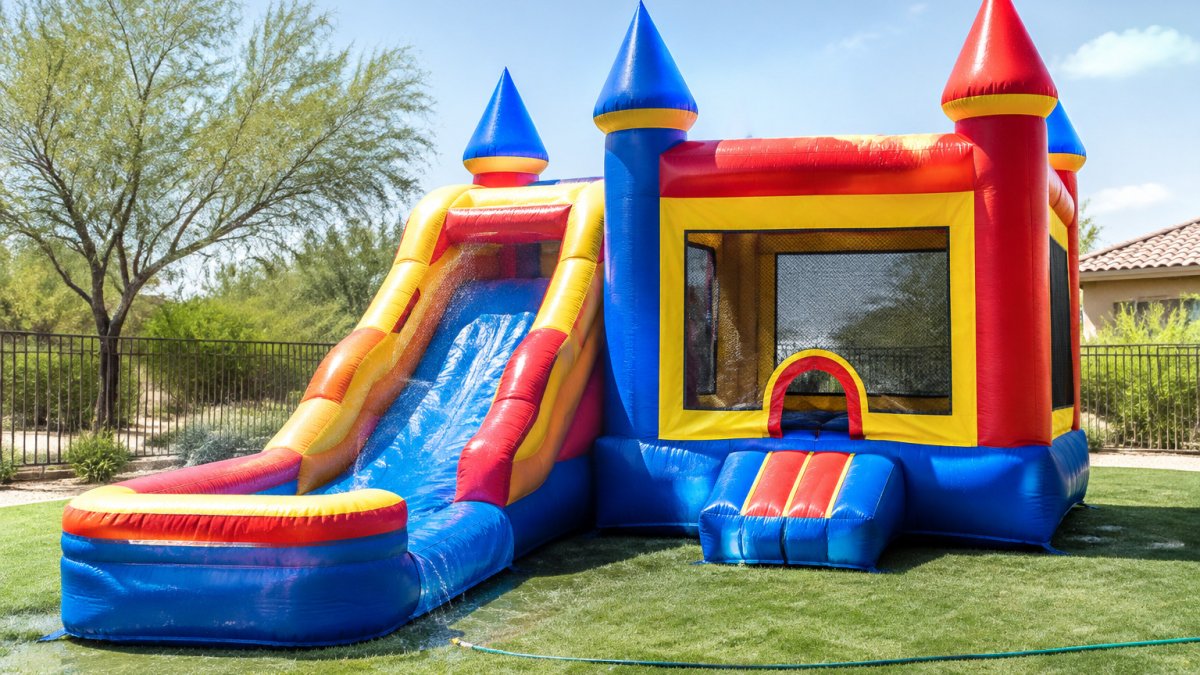
A bounce house combo packs several play features into one inflatable. Most units combine a bounce area, one or more slides, and extra play elements. Some add a splash pool or water play setup for hot days. Lil Bubs Bounce House rents these combos for birthdays and backyard parties in the Avondale area.
The big question for most parents is simple: which features actually matter for your kids and your yard? This guide ranks the five features that shape the experience most. We cover what each one does, where it works well, and where it can fall short.
Quick note on terms. A "combo" is a single inflatable that bundles multiple play zones. A "wet" setup uses water, while a "dry" setup runs without it. Many combos can switch between the two.
Feature 1: Bounce Area and Play Zones
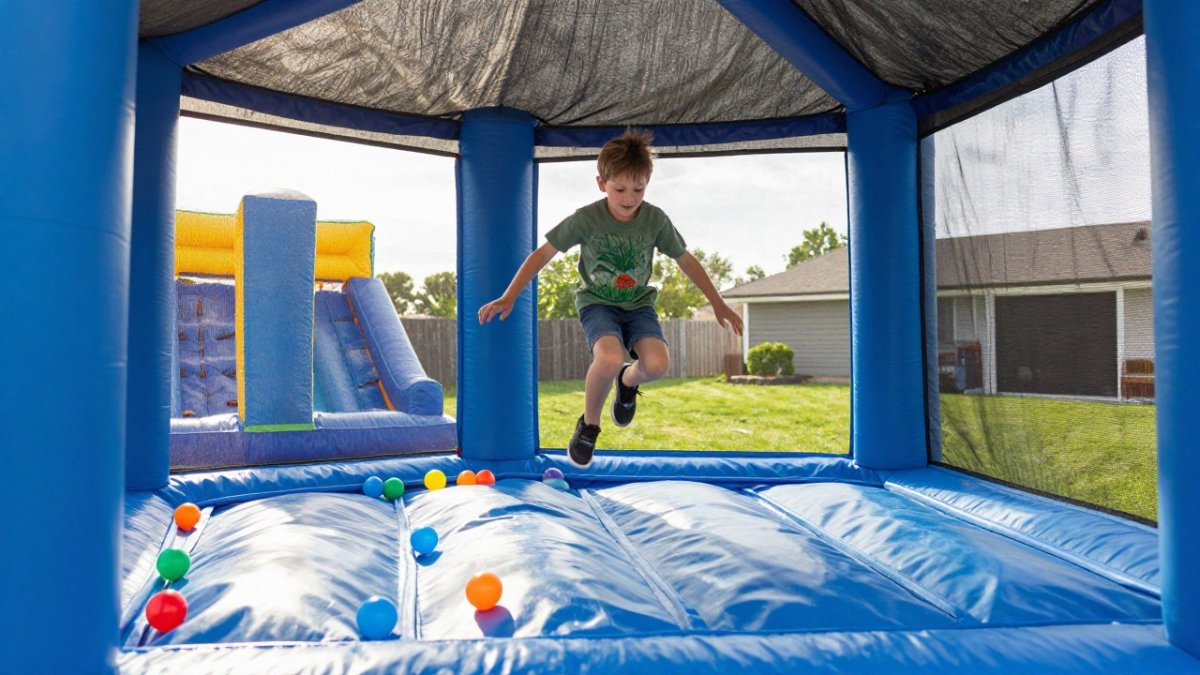
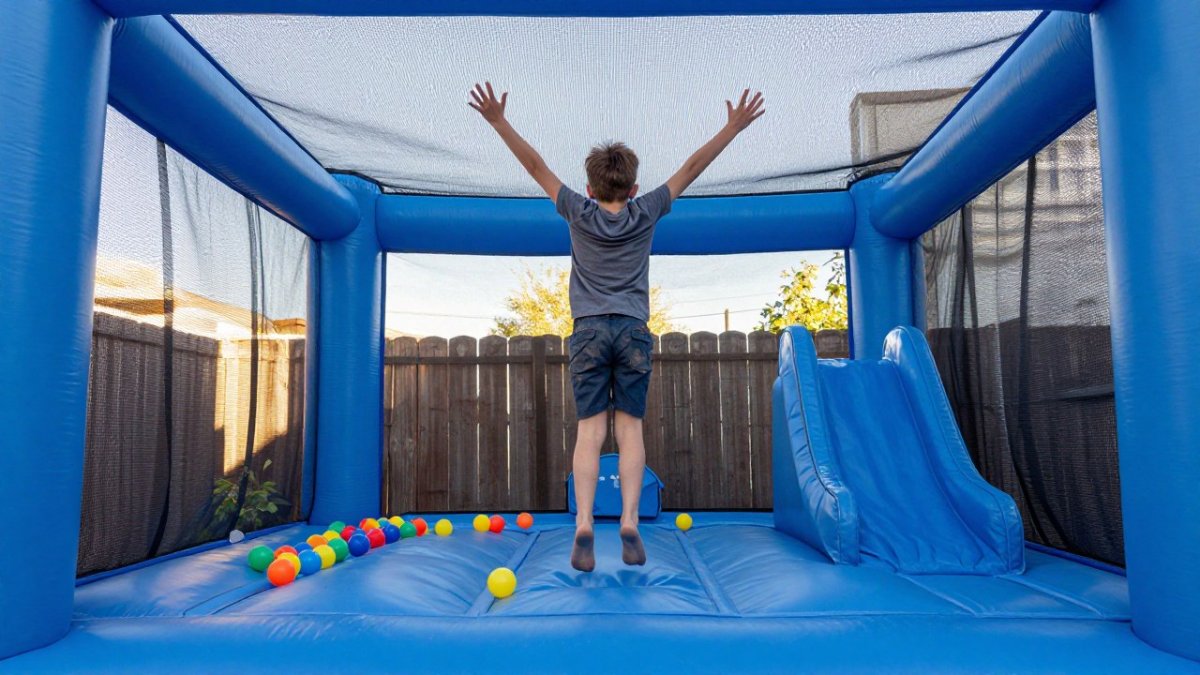
The bounce area is the heart of any combo. It is the main space where kids jump, tumble, and burn energy. Look at the floor size first, then the wall height and netting. A larger floor gives more room for a group of kids, but it also needs more yard space.
Play zones are the sections that break up the bounce floor. Some combos include a basketball hoop, a climbing wall, or a separate obstacle area. These extras keep older kids interested longer.
Pros:
- Gives kids a clear, contained space to jump
- Extra play zones keep a mixed-age group busy
- Netting and walls help reduce falls
Cons:
- Larger floors need more yard space
- Crowded play can lead to bumps if the group is too big for the floor
Our advice: match the floor size to the number of kids who will be on it at once, not the total guest count.
Feature 2: Attached Slide Options
Attached slides are one of the most popular features on a combo. They let kids climb up and slide down without leaving the inflatable. Many combos offer a dry slide, while wet combos often include a water slide that adds a splash finish.
Check the slide's entry point and runout. A steep drop looks exciting, but a gentler slope is easier for younger kids. Make sure the slide lines up with the bounce area so kids land on soft material.
Pros:
- Kids can climb and slide without leaving the unit
- Water slides add a cooling option on warm days
- Multiple slide lanes reduce waiting in line
Cons:
- Steeper slides suit older kids better
- Wet slides need a water source and drying time afterward
Watch out: a slide that drops straight onto hard ground can cause injuries. Confirm the landing zone has soft, level surface under the runout.
Feature 3: Splash Pool and Water Play
Water play is what turns a combo into a wet setup. A splash pool or spray feature lets kids cool off and play in the water. This is the feature that matters most on hot afternoons.
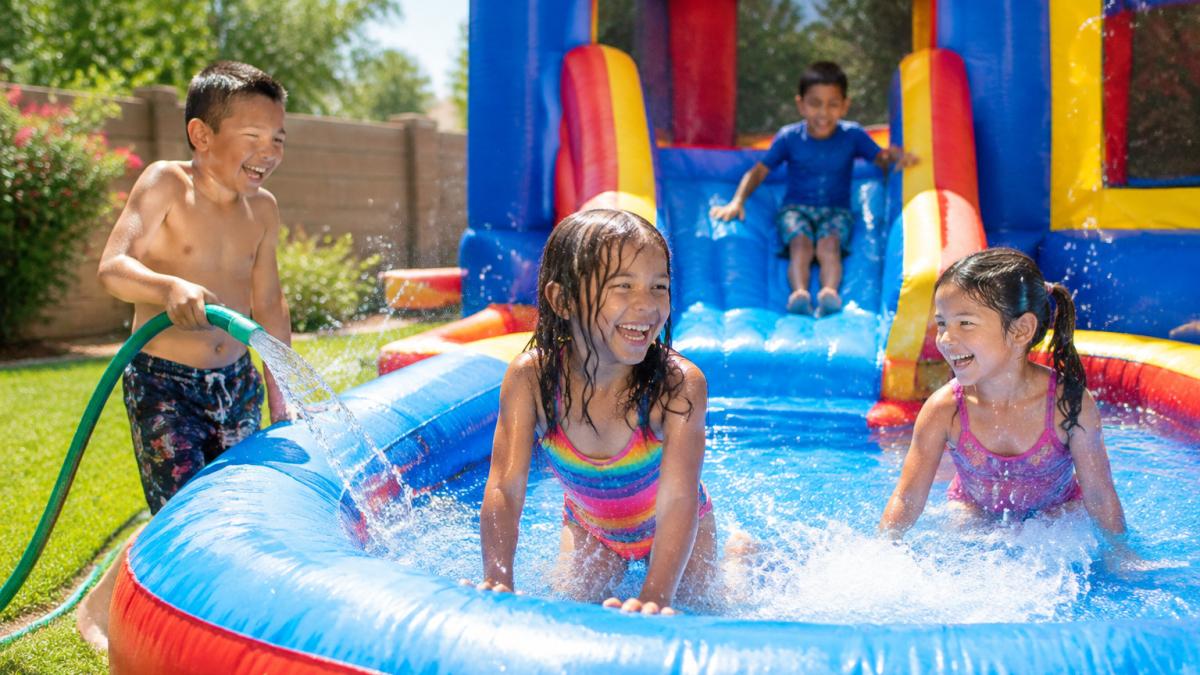
Water setups need a hose connection and a place for runoff. Check your yard's drainage before you book. Also consider how long the water play will run, since the inflatable has to be drained and dried afterward.
Pros:
- Cools kids down during hot weather
- Gives the party a second activity beyond bouncing
- Works well for mixed-age groups
Cons:
- Needs a hose connection and water access
- Slippery surfaces call for close supervision
- Requires extra cleanup and drying time
Feature 4: Built-In Safety Features and Supervision
Safety features are not an extra. They are the foundation of a good rental. Look for sturdy netting, secure anchoring, and clear entry points. Padded edges and non-slip surfaces reduce injuries. Also check that the unit has been cleaned and inspected before it arrives.
No inflatable is safe without adult supervision. Assign at least one adult to watch the unit at all times (Don’t Get Swept Away; CPSC Reminds Consumers to Be Grounded in Safety When Using Bounce...). Set clear rules, such as one child per slide at a time and no flips or pushing.
Pros:
- Netting and padding reduce the risk of falls
- Clear rules keep kids playing safely
- A cleaned, inspected unit gives parents peace of mind
Cons:
- Safety still depends on active adult supervision
- Age and weight limits must be respected
Common mistake: parents assume the inflatable will keep kids safe on its own. It will not. Supervision matters more than any single feature.
Feature 5: Extra Play Elements Like Climbing Walls and Hoops
Extra play elements give kids more ways to play. A climbing wall challenges older children. A basketball hoop adds a game they can share. Some combos include obstacle sections or mini courses. These features help keep a crowd engaged for the full party.
Think about your guest list. Younger kids often prefer the bounce area and simple slides. Older kids usually want the climbing wall or hoop. A combo with a mix of elements suits a wider age range.
Pros:
- Keeps older kids engaged
- Adds variety for longer parties
- Helps mixed-age groups share the unit
Cons:
- Extra elements take up more space
- Climbing walls need the right age and skill level
Wet vs Dry Bounce House: Choosing Based on Your Event
Choosing between a wet and dry combo comes down to four practical variables: the weather forecast, the ages and number of kids, the water and drainage your site can support, and how much cleanup time you can absorb after the party. Here is how to decide.
Weather and season. A wet combo makes sense when the forecast high is comfortably warm and the kids will be in swimsuits anyway.
Water supply and drainage. Wet use needs a hose connection that reaches the unit without crossing a walkway, plus a plan for where the runoff goes.
Surface suitability. Inflatables need a flat, level, clear surface. Grass is the most forgiving; pavement and gravel work only with the right anchoring and padding, and they get slick fast when wet.
Capacity and ages. Match the unit to how many kids will be on it at once, not the total guest count.
Cleanup and drying. Wet use adds drain, towel-dry, and air-dry time before the unit can be packed.
Here is a decision guide:
- Hot afternoon outdoors, good drainage: Wet combo with a splash feature
- Mild or windy weather, or rain possible: Dry combo
- Mixed-age group: Combo with separated bounce, slide, and climbing zones
- Small yard or no water access: Dry combo
- Same-evening return or late finish: Dry combo
- Pavement or gravel surface: Dry combo with proper anchoring and padding
Watch out: booking a wet combo without confirming a hose reach and a runoff path is the most common setup failure, the unit arrives, the water has nowhere to go, and the party moves indoors anyway.
The right choice depends on a few practical factors, summarised below.
| Factor | Favours wet combo | Favours dry combo |
|---|---|---|
| Weather | Hot, comfortably warm forecast | Mild, windy, or rain possible |
| Water and drainage | Hose reaches unit; clear runoff path | No water access or poor drainage |
| Surface | Flat, level ground with drainage | Pavement or gravel with anchoring |
| Guest ages | Mixed-age group with separated zones | Mostly under about five |
| Cleanup time | Time to drain and dry | Same-evening return or late finish |
Setup Space Requirements and Booking Your Combo Rental
Most combo listings quote the inflated footprint, but the space you actually need is larger. Plan for the unit's footprint plus a clear walking buffer on every side for safe entry, exit, and supervision. A combo with a climbing wall or a long slide needs more clearance on that side than the base dimensions suggest.
Site checklist before you book:
- Footprint plus buffer: Measure the flat, clear area, not just the grass. Fences, sheds, planters, and patio furniture all shrink usable space.
- Overhead clearance: Look up. Low branches, power lines, and roof overhangs are disqualifying, inflatables rise well above head height.
- Ground surface: Level grass is ideal. Pavement and gravel need anchoring and padding; slopes, roots, and sprinkler heads need relocation.
- Water access (wet use): Confirm a hose reaches the unit without crossing a walkway, and identify where runoff drains.
- Power: Check whether the blower can reach an outlet on a dedicated circuit, and plan for a safe path for the cord so it is not a trip hazard.
- Access route: The delivery crew has to move a heavy rolled unit from the street or driveway to the setup spot. Narrow gates, stairs, and tight corners can make a spot unusable even when the yard is big enough.
Capacity planning. Match the unit to simultaneous users, not total guests. A bounce floor sized for a small group keeps kids from piling up, and separating the slide landing from the bounce area reduces collisions. For a mixed-age party, plan the layout so younger kids have a clear zone away from the slide runout and climbing wall.
Booking sequence that avoids surprises:
- Measure the flat, clear area and note overhead obstructions and the delivery access route.
- Decide wet or dry use based on weather, drainage, and cleanup time.
- Confirm the water source and runoff path if wet use is planned.
- Share the measurements and surface type when you reserve so the right unit is assigned.
- Clear the area of sharp objects, debris, and pet waste before delivery.
- Walk the setup with the crew on arrival and confirm the anchoring and entry points.
Watch out: the most common booking mistake is measuring only the inflatable's footprint and forgetting the buffer and slide runout, a unit that fits the grass can still be unusable if there is no safe landing zone or access path.
Frequently Asked Questions
What is a wet or dry bounce house combo?
A wet or dry bounce house combo is an inflatable rental that pairs a bounce area with a slide, play elements, and, in wet versions, a splash pool or water feature. The dry setup is used without water, while the wet setup connects to a garden hose so kids can splash and slide. Many combos let you switch between both modes, which makes them flexible for backyard parties in warm weather. Before booking, confirm with the provider which features are included and whether a water connection is needed at your site.
Can a wet or dry bounce house combo be used without water?
Yes. A dry bounce house combo is designed to run without water, so the bounce area, slide, and play features work the same way with the blower running and no hose connected. Many wet combos can also be used dry, which is useful if the weather turns cool or your guests prefer not to get wet. Ask your provider whether the specific unit you are renting can be set up in both modes and whether there is an extra charge for the water components.
How much space does a wet or dry bounce house combo need?
Space needs depend on the unit size, but most combos require a flat, clear area with room for the inflatable, the blower, and a safety perimeter around the sides. Plan for extra room at the slide exit and near the water hose connection so guests can enter and leave safely. Check the dimensions with your rental provider and measure your yard before the event. Keep the setup away from trees, overhead wires, and fences.
What safety features should a bounce house combo have?
Look for sturdy anchoring, netting or enclosed sidewalls that keep children inside the play area, and a clearly marked entry and exit. Slides should have a smooth, flat run-out and be free of tears or loose seams. Non-slip surfaces and a blower that stays securely connected also reduce risk. An adult should supervise children at all times, especially on wet setups where surfaces get slippery.
Ready to plan your party? Book your wet or dry combo with Lil Bubs Bounce House today and give your kids a day they will remember.