 blog
How to Plan a Kids Birthday Party: Checklist
Last Updated: November 21, 2026
Quick Summary
A kids birthday party checklist starts with the basics: set a budget, pick a theme, choose a date and guest count, book rentals and vendors, then plan food, activities, and safety. Work in that order and finish big bookings early to avoid a last-minute scramble.
- Set your budget first and split it across venue, rentals, food, cake, decorations, and activities.
- Plan your guest count around one guest per year of age, plus a few extra.
- Send invitations about three weeks ahead and track RSVPs digitally or in a spreadsheet.
- Book rentals and order the cake two weeks out, then buy food and supplies one week out.
- Assign a named adult to each play area and keep a first-aid kit within reach.
Table of Contents
- Kids Birthday Party Checklist: Start With the Basics
- Set Your Budget and Pick a Theme
- Build Your Guest List and Choose a Date
- Kids Birthday Party Planning Timeline, Week by Week
- Kids Birthday Party Activities for Ages 4 to 8
- Food, Drinks, Cake, and Safety Planning
- Booking Your Party Rentals and Setup Day
- Frequently Asked Questions
Kids Birthday Party Checklist: Start With the Basics
Planning a kids birthday party feels like a lot, but a good kids birthday party checklist turns it into a series of small, doable steps. This guide walks families through each decision, from budget to setup day.
Most parents make the same mistake: they start with decorations or the cake before settling the basics. Work in this order instead:
- Set your budget
- Pick a theme
- Choose a date and guest count
- Book your rentals and vendors
- Plan food, activities, and safety
Keep this checklist somewhere you can see it. Check items off as you go, and you'll avoid the last-minute scramble that catches most families off guard.
Set Your Budget and Pick a Theme
A budget tells you what you can actually afford before you fall in love with a pricey idea. Write down a total number first, then split it across the big categories. The split matters more than the total, because it forces you to decide what the party is really about.
A working budget split:
- Venue or backyard setup, often the largest single line if you rent a space; near zero if you host at home.
- Rentals, inflatables, tables, chairs, canopy, linens. Pricing depends on quantity, dates, and delivery.
- Food and drinks, plan per child, not per adult; kids eat less than parents expect during active play.
- Cake and treats, a sheet cake or cupcakes usually cost less per serving than a sculpted cake.
- Decorations and party supplies, plates, napkins, banners, balloons.
- Activities and favors, games, craft supplies, goodie bags.
A common pattern among parents who keep costs down is to pick two categories to splurge on (usually the activity and the cake) and trim the rest. Decorations are the easiest place to save: a themed tablecloth, a banner, and a few balloons read as "done" to guests, and kids rarely notice the difference. Favors are the second easiest, one useful item per child (a craft they made, a small book, a reusable cup) often lands better than a bag of small plastic toys.
Ways to protect the budget without shrinking the fun:
- Host at home or in a backyard to remove the venue line entirely.
- Choose a morning or early-afternoon slot, and ask when you request a quote whether timing affects the price.
- Combine the cake and dessert into one item instead of buying both.
- Cap the guest list early, every additional child adds food, favor, and supervision cost.
- Skip printed invitations in favor of digital ones, which also make RSVP tracking easier.
Pricing for rentals depends on quantity, dates, and delivery, so contact Lil Bubs Bounce House directly for a current quote before you finalize your numbers. Get the quote before you commit to a theme, because the rental cost can reshape the rest of the split.
Watch out: building the budget around a theme you saw online before you have rental quotes is the most common way parties overspend, the theme locks in purchases you have not priced yet.
Once the budget is set, pick a theme. A theme keeps decisions simple. If your child loves animals, every choice from the invitation to the cupcakes can follow that idea. Choose something your child is excited about now, not something that will feel babyish in a year. Ask your child to pick between two or three options you have already checked against the budget, rather than an open-ended question, it gives them ownership without opening the door to an unaffordable idea.
The article breaks the budget into the main categories and suggests where to save, so here is a quick reference for planning the split.
| Budget category | What it covers | Planning note |
|---|---|---|
| Venue or backyard setup | Space for the party | Near zero if you host at home |
| Rentals | Inflatables, tables, chairs, canopy, linens | Price depends on quantity, dates, and delivery |
| Food and drinks | Meals and drinks for guests | Plan per child, not per adult |
| Cake and treats | Sheet cake or cupcakes | Usually less per serving than a sculpted cake |
| Decorations and supplies | Plates, napkins, banners, balloons | Easiest place to save |
| Activities and favors | Games, crafts, goodie bags | One useful item per child often works best |
Build Your Guest List and Choose a Date
Your guest count drives almost every other decision, so settle it early. Many parents invite one guest per year of the child's age, plus a few extra. Fewer kids means less cost, less supervision, and a calmer day.
Pick a date two to three weeks out if you can. That window gives you time to send invitations, track RSVPs, and book rentals before weekends fill up. Saturday afternoons are the most popular slots, so flexibility helps.
Send invitations about three weeks ahead. Digital invites make RSVP tracking easy, and a simple spreadsheet works well if you're managing replies by hand.
Kids Birthday Party Planning Timeline, Week by Week
A timeline keeps the planning manageable. Use this as a rough guide:
- 6 to 8 weeks out: Set the budget, pick a theme, and reserve your date.
- 4 weeks out: Build the guest list and order invitations.
- 3 weeks out: Send invitations and start tracking RSVPs.
- 2 weeks out: Book rentals, confirm the venue, and order the cake.
- 1 week out: Buy food, drinks, and party supplies.
- 2 to 3 days out: Prepare favors.
- Party day: Set up early and check everything before guests arrive.
Stress-free planning comes from finishing the big bookings early. Leave the small tasks for the final week.
Kids Birthday Party Activities for Ages 4 to 8
Activities should match the age of the children. Kids aged 4 to 8 love movement, simple games, and a sense of winning. Plan a mix of active and calm time so the kids don't burn out.
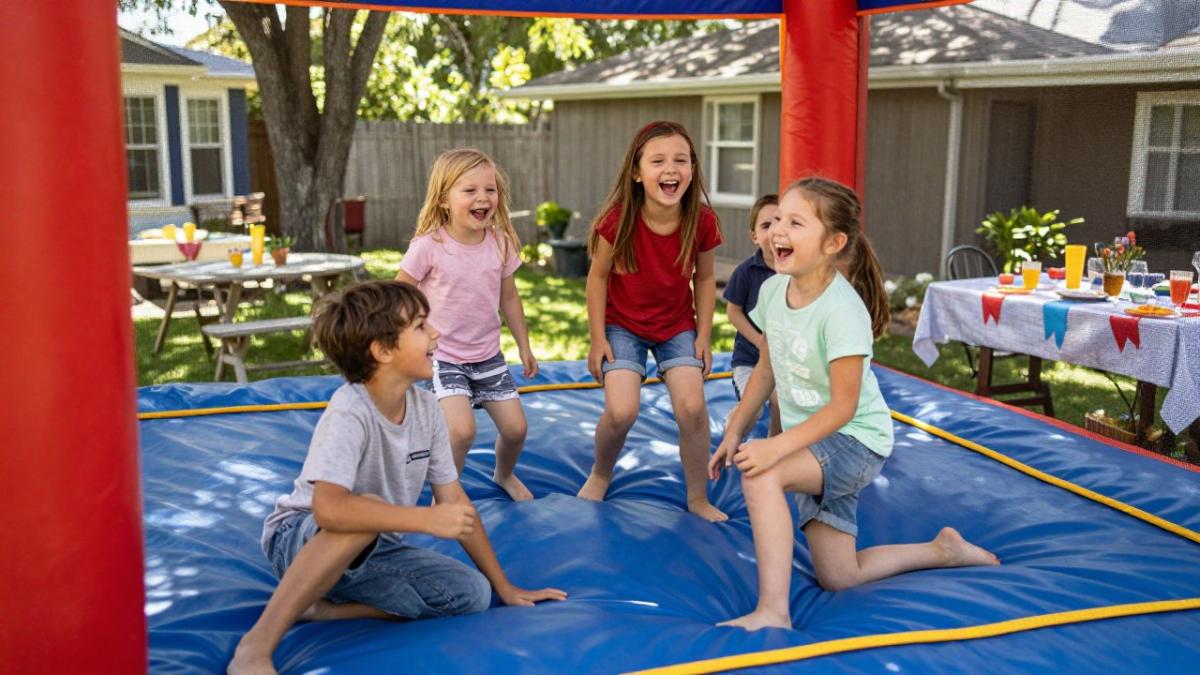
Activity ideas by age:
- Ages 4 to 5: Bounce house play, bubble stations, simple musical chairs
- Ages 6 to 7: Relay races, obstacle courses, short team games
- Age 8: Mini sports challenges, craft stations, scavenger hunts
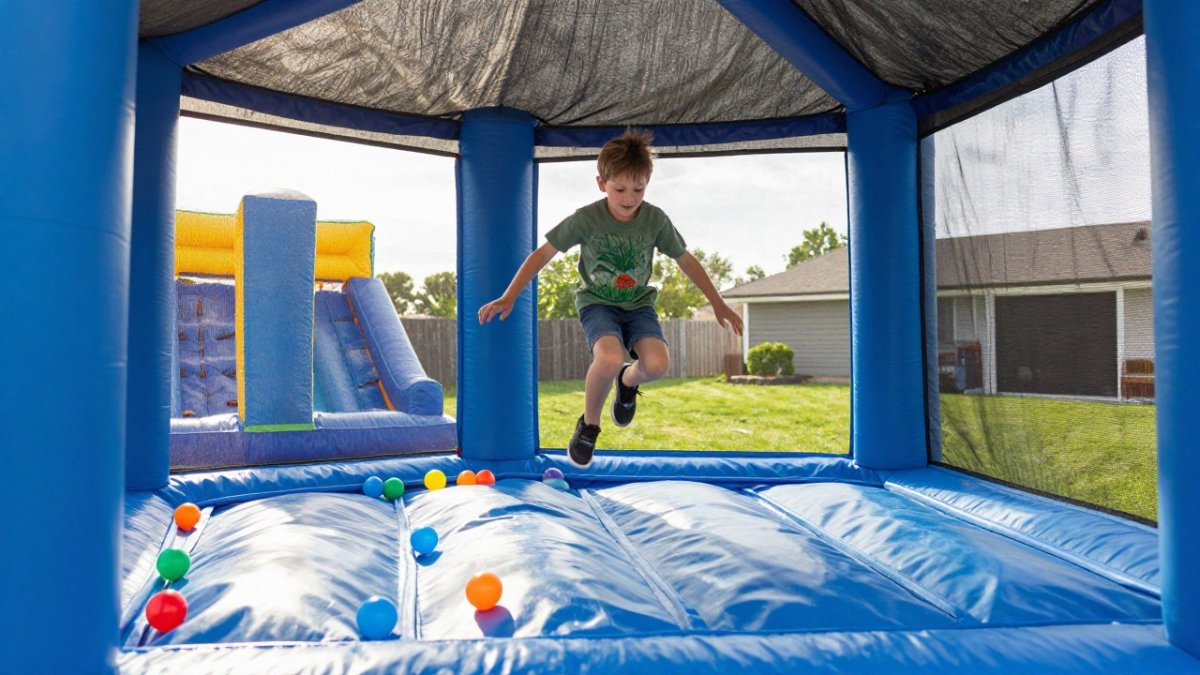
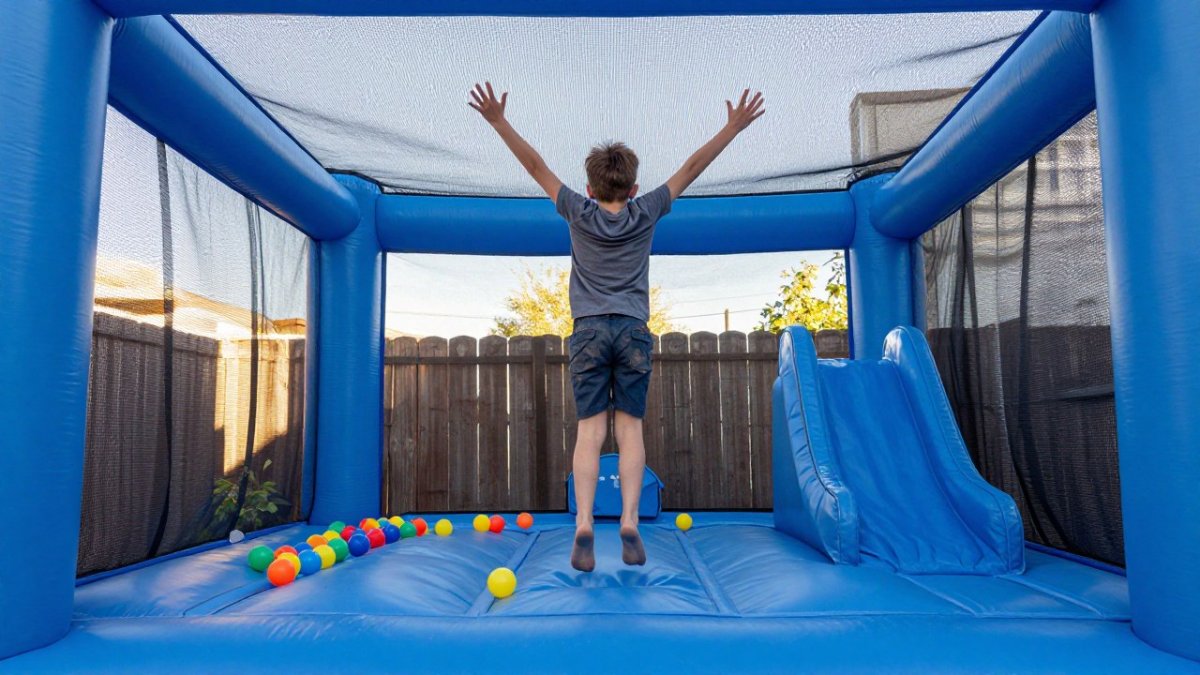
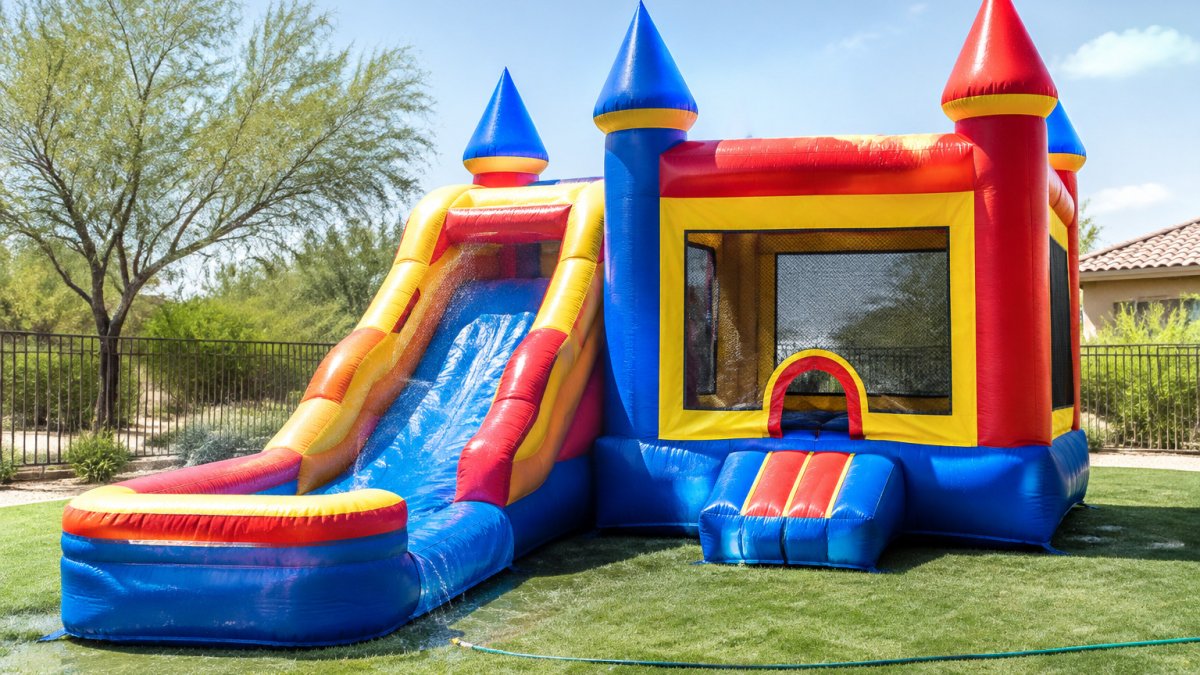
Bounce houses work well for this age range because they give kids a big, open space to play. Lil Bubs Bounce House offers bounce houses, water slides, and obstacle courses, so you can choose a rental that suits your child's age and energy level.
Bounce party and games planning is a good next step if you want a structured schedule for the afternoon.
Food, Drinks, Cake, and Safety Planning
Keep the food simple. Kids eat quickly during active play, so finger foods, sandwiches, fruit, and a few snacks cover most needs. The harder part is making sure every child can actually eat what is served and that an adult is watching at all times.
Collect dietary needs before you shop. Add a line to the invitation asking parents to list food allergies, intolerances, and dietary restrictions, and ask them to reply by the RSVP date so you can plan. A simple shared spreadsheet with one column per child works well.
Build the menu around safe defaults. Serve at least one option that is free of the most common allergens (dairy, eggs, peanuts, tree nuts, wheat, soy) and one that fits a vegetarian diet, then let the specialty items be the extras rather than the only choice. Keep serving utensils separate for allergen-free dishes to avoid cross-contact (the FDA).
Accessibility and sensory needs. Ask on the invitation whether any guest needs a quieter space, a shaded seat, a step-free path, or a break from noise. A small calm-down corner away from the music and the inflatable is cheap to set up and makes a real difference for kids who get overwhelmed.
Cake and drinks. Plan a cake or cupcakes ahead of time. Order a few days before the party so it arrives fresh, and confirm whether the bakery can accommodate an allergy request. Keep drinks easy to reach, offer water alongside juice, and set out more water than you think you need on hot days.
Safety and supervision plan. Write this down before the party, not during it.
- Assign at least one named adult to each play area, and rotate so no one is stuck supervising for the whole party.
- Keep a first-aid kit within reach and know where the nearest urgent care is.
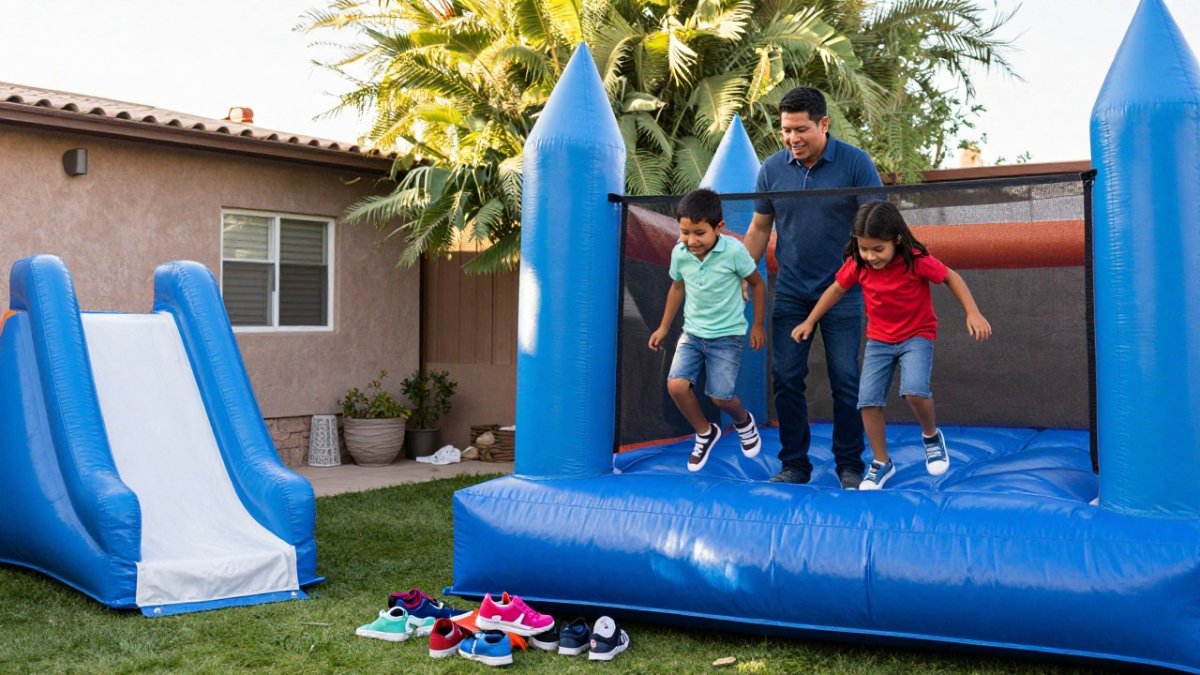
- Check the rental surface and anchoring before kids go in, and set clear rules for shoes, age limits, and time on the equipment.
- Plan a shaded area and water for hot days.
- Keep a written list of emergency contacts and each child's parent phone number at the check-in table.
- Decide in advance who handles a lost or upset child, and where that child will be taken.
Watch out: a single adult watching both the inflatable and the food table is the most common supervision gap, split those roles explicitly and tell each adult which one is theirs.
Weather matters too. If the forecast looks rough, have a backup plan such as moving the party indoors or shortening the rental time, and decide by the morning of the party so you can notify guests.
Booking Your Party Rentals and Setup Day
Rentals can book up fast, especially on weekends during busy months. Reserve your bounce house, tables, chairs, and canopy as early as you can. Lil Bubs Bounce House offers an online booking system for reserving equipment.
Here's what to confirm when you book:
- Delivery date and arrival window
- Setup location and access to power or a water source, if needed
- Pickup time after the party
- Surface requirements, such as a flat, clear area in the yard
Setup day runs smoother with a short plan. Clear the yard of toys and debris, mark the spot for the bounce house, and move any pets indoors.
If you're booking at the last minute, call early and ask about open slots. Flexibility on time or date can help.
If you have questions about your rental or want to reserve equipment for your party, book a bounce house rental for your party and we'll help you plan the setup. For a bounce house that fits your party space, browse combo bounce houses and pick the one that suits your guests.
Frequently Asked Questions
What is needed for a kids birthday party?
A basic kids birthday party needs a date and guest list, a venue, invitations, food and drinks, a cake, decorations, and a few planned activities. Start with a budget so you know which items to prioritize. Many families add entertainment or party rentals such as bounce houses, tables, chairs, and a canopy for shade. Build a simple checklist and check off each item a few weeks before the event so nothing is missed on party day.
How far in advance should you plan a kids birthday party?
Most families begin planning four to six weeks before the party. Send invitations about two to three weeks ahead so guests can RSVP. Book any party rentals, entertainers, or venues as early as possible, since popular dates fill up quickly, especially on weekends. Order the cake about one to two weeks before the party, and handle last-minute purchases of supplies and food in the final few days.
Is 2 hours enough for a kids party?
Two hours is a common length for a kids birthday party with children ages 4 to 8. It leaves time for arrival, one or two structured activities, food, cake, and goodbyes without wearing out the guests. Plan a short schedule so the activities flow from one to the next, and add a buffer of about 15 minutes at the start for late arrivals. Longer parties may need more activities and snacks to keep children engaged.
What activities are good for a children's birthday party?
For children ages 4 to 8, good activities include bounce house time, relay races, musical chairs, freeze dance, scavenger hunts, craft stations, and simple obstacle courses. Choose a mix of active and calm activities so energy levels stay balanced. Keep supervision in mind by assigning adults to each activity area, and have a backup indoor option in case of weather.