 how-to
7 Steps to Sanitize a Bounce House Safely
Last Updated: November 1, 2026
Quick Summary
To sanitize bounce houses safely, clean first to remove dirt, then rinse, disinfect with a product labeled for vinyl, and let it sit for the full contact time. Never mix bleach with ammonia-based cleaners or vinegar, and dry the unit completely before reopening.
- Cleaning removes dirt, sanitizing lowers germs to a safer level, and disinfecting kills nearly all germs.
- Always clean first, because a disinfectant cannot work well through a layer of dirt.
- Rinse until the water runs clear, since soap film can neutralize disinfectants.
- Honor the label's contact time, often several minutes, rather than wiping early.
- Dry to the touch, checking seams and the floor by hand, to prevent mildew.
Table of Contents
- Cleaning, Sanitizing and Disinfecting: What Each Term Means
- What You'll Need to Sanitize a Bounce House
- Step-by-Step: How to Disinfect a Bounce House
- How to Remove Mold From a Bounce House
- Choosing a Safe Disinfectant for Inflatables
- How Long to Dry a Bounce House After Cleaning
- Book a Clean, Ready-to-Play Bounce House With Lil Bubs
- Frequently Asked Questions
Cleaning, Sanitizing and Disinfecting: What Each Term Means
Cleaning, sanitizing, and disinfecting are not the same thing, and mixing them up is the most common mistake people make with bounce houses. Cleaning removes dirt, dust, and visible grime (the EPA). Sanitizing lowers the number of germs to a safer level. Disinfecting kills nearly all germs on a surface (the CDC). Most parents need all three steps, but they should be done in order.
Clean first. A disinfectant cannot work well through a layer of dirt, so wash the surface before you apply anything strong. Think of it as a three-step job: wash, rinse, then disinfect.
Watch out: Mixing bleach with ammonia-based cleaners or vinegar can release harmful fumes, so never combine products when you sanitize bounce houses.
What You'll Need to Sanitize a Bounce House
Gather your supplies before you start so the job goes smoothly.
- Mild dish soap or an all-purpose cleaner
- A soft-bristle brush and clean rags
- A shop vacuum with a brush attachment
- A spray bottle for disinfectant
- A disinfectant labeled for use on vinyl or inflatable surfaces
- A garden hose with a gentle spray nozzle
- Gloves and a dry towel
Check the product label for dilution ratios and contact time before you buy. Those details matter more than the brand name.
Step-by-Step: How to Disinfect a Bounce House
Follow these steps in order. The sequence matters more than the products you choose, because a disinfectant applied over dirt or soap film will not perform the way its label promises.
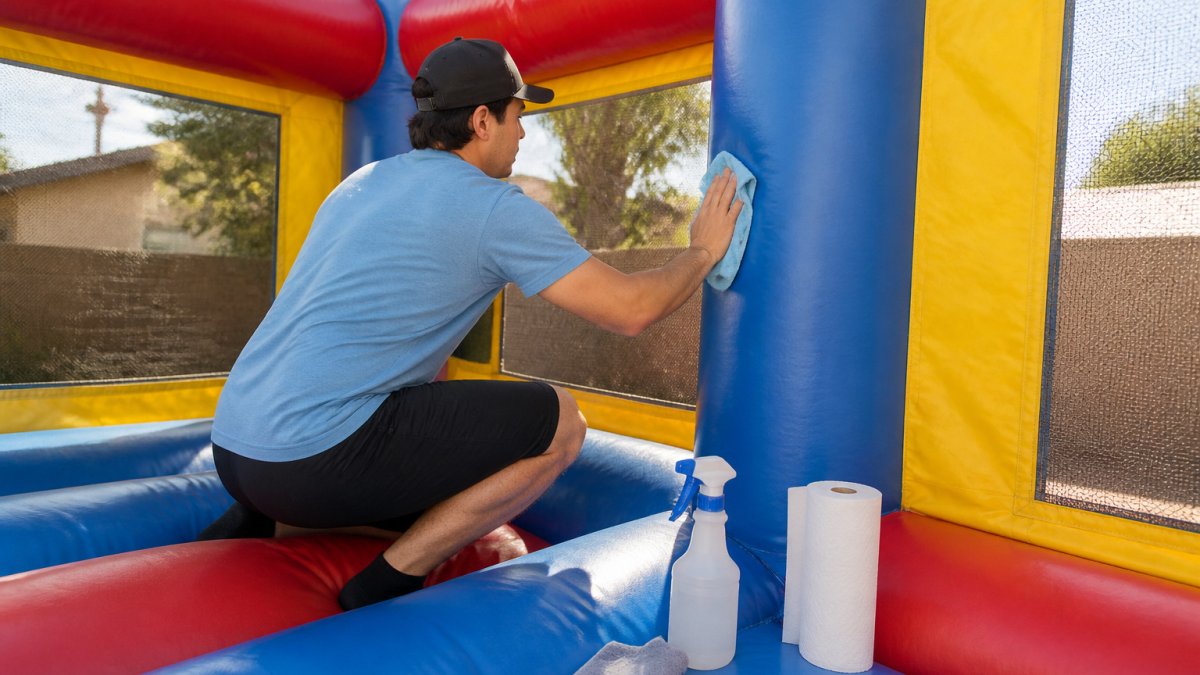
- Set up and inspect. Park the unit on a flat, shaded surface if possible, inflate it fully, and walk the interior with a flashlight. Note stains, sticky spots, and any tears or seam separation. Damage changes your plan: a torn seam traps moisture and should be flagged before cleaning, not after.
- Remove loose debris. Vacuum the floor, corners, and seams with a shop vacuum and brush attachment. Pay attention to the crumb traps at the base of the slide and around the entry step, where grit collects and grinds into vinyl.
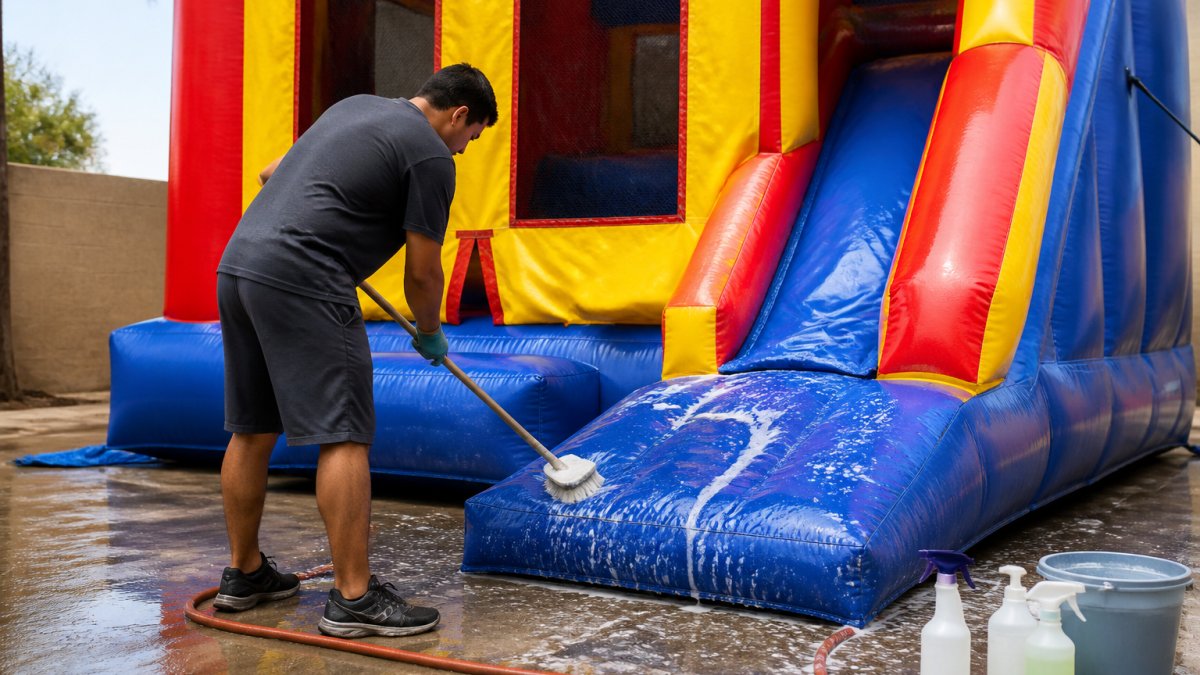
- Pre-clean with soap and water. Mix a mild dish soap or an all-purpose cleaner at the dilution on its label. Scrub walls, floor, and slide with a soft-bristle brush. Work top to bottom so dirty runoff does not re-soil clean areas.
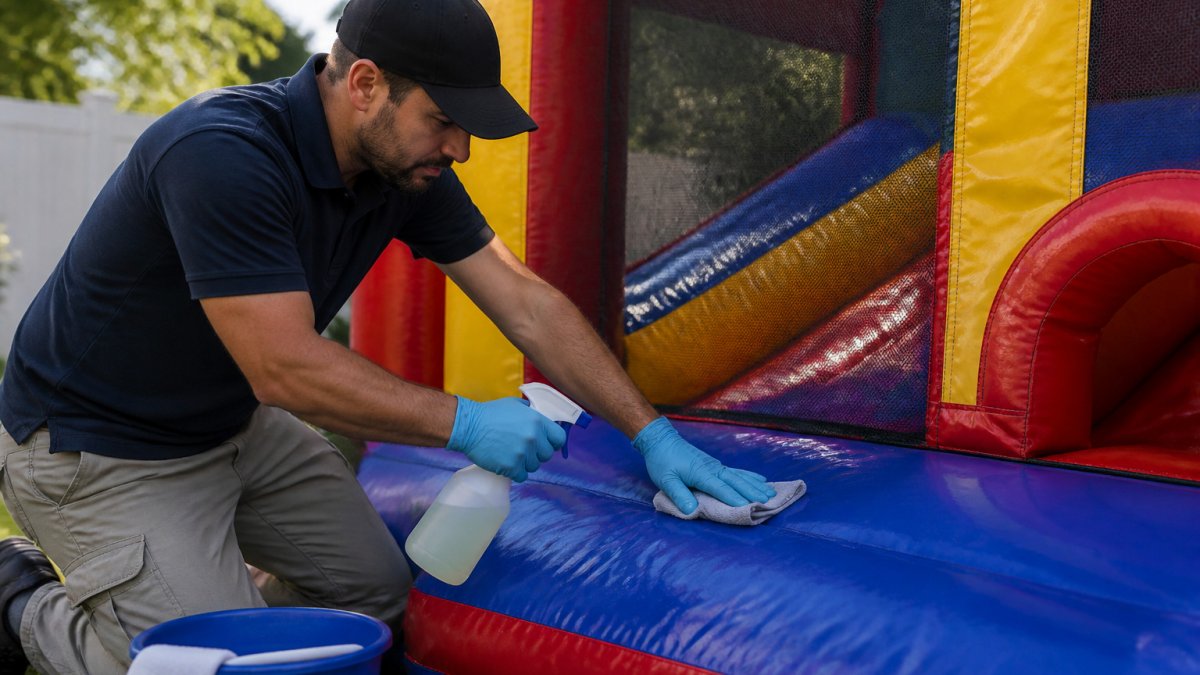
- Spot-treat stains. Apply cleaner to a rag, not directly to the vinyl, and work gently. Aggressive scrubbing dulls the surface and can lift printed graphics.
- Rinse until the water runs clear. Soap film neutralizes many disinfectants and leaves a residue children can pick up on their hands. Rinse, then rinse again at seams and the floor, where solution pools.
- Apply disinfectant to high-touch surfaces first. Handles, entry and exit points, the slide lip, the step, and any grab lines are the priority. Then treat the floor and walls. Use a spray bottle for even coverage and keep the nozzle far enough back that you are misting, not soaking.
- Honor the label's contact time. This is the step most people rush. A disinfectant needs its stated dwell time, often several minutes, to reach its claimed kill level. Set a timer. Wiping early wastes the product and gives you a false sense of security.
- Rinse residue and dry completely. Follow the label's rinse instructions. If the product requires a rinse, rinse; if it does not, wipe with a clean damp cloth anyway on surfaces children touch with hands and faces. Then dry fully before reopening.
Before you reopen: the surface should be dry to the touch, including seams and the floor, and free of visible residue and soap film. A quick hand check across the slide and entry step catches damp spots a visual check misses. Children should not use the unit while it is still wet from cleaning, both because of slip risk and because residue is more easily transferred to skin and clothing.
How to Remove Mold From a Bounce House
Mold and mildew often show up on damp vinyl in shaded areas. Scrub the spot with a mild soap solution and a soft brush, then wipe it dry. For stubborn marks, a diluted disinfectant labeled for vinyl can help when you sanitize bounce houses, but test it on a small hidden spot first to make sure it does not discolor the material.
Never let a bounce house sit wet for long periods. Moisture is what lets mold return, so dry the unit fully after every cleaning.
Choosing a Safe Disinfectant for Inflatables
Not every household cleaner suits inflatable vinyl. Stronger products can weaken seams or fade the surface over time. Look for a disinfectant that lists vinyl or inflatables on its label, and follow the dilution directions exactly.
Diluted bleach can work for disinfecting, but it is harsh. Use it only when the label allows it, rinse thoroughly afterward, and avoid it on surfaces children touch with their hands and faces. Many parents choose a milder, label-approved product to reduce chemical residue.
How Long to Dry a Bounce House After Cleaning
Drying is where most mold problems are actually created. A unit that looks dry on the outside can hold moisture in seams, the floor, and folded layers, and that trapped moisture is what feeds mildew between rentals or between birthday parties.
How long it takes. There is no single number, because drying depends on airflow, humidity, and temperature. On a warm, breezy day with the blower running and the unit fully inflated, most surfaces dry in a few hours. The floor, the base of the slide, and thick seams take longest. In humid weather, in shade, or in cool temperatures, plan for the better part of a day and check by hand rather than by clock.
How to dry it properly.
- Keep the unit inflated with the blower running so air moves through the interior.
- Open or unzip any panels the manufacturer allows, and position the unit so sun and breeze reach the floor and slide.
- Wipe standing water out of seams and corners with a dry towel before it can soak in.
- Run a fan or blower through the interior if the day is humid or still.
- Check the floor and seams by hand, not just by eye. Cool, damp vinyl feels different from dry vinyl even when it looks the same.
Cold and humid weather. Drying slows dramatically when temperatures drop or humidity is high. In those conditions, extend dry time, add airflow, and do not fold the unit until a hand check confirms it is dry. Folding a damp unit traps moisture in layers where air cannot reach, and mildew can develop before the next use.
Storage checks. Store the unit only when fully dry, in a dry space, and inspect it before each use. A quick look and smell at the seams and floor catches mildew early, when it is a spot treatment rather than a full reclean. If you store in a garage or shed, keep the unit off concrete and away from damp walls.
Book a Clean, Ready-to-Play Bounce House With Lil Bubs
If you would rather skip the cleaning job, Lil Bubs Bounce House offers bounce house rentals for birthdays and backyard events in the Avondale area. You can browse the bounce house rental category and book directly on our website. Pricing depends on the unit, the date, and delivery, so check the site or request a quote for current rates.
Frequently Asked Questions
How do you sanitize a bounce house?
Start by removing loose dirt and debris with a shop vacuum. Wash the vinyl with warm water and mild dish soap using a soft-bristle brush, then rinse thoroughly with clean water. Next, apply a disinfectant labeled safe for vinyl or inflatables and let it sit for the contact time printed on the label. Rinse again to remove residue, then let the unit air-dry completely before anyone plays in it. Following this order prevents soap film from interfering with disinfection and keeps the vinyl from degrading.
Can you use bleach to clean a bounce house?
Diluted bleach can disinfect some vinyl surfaces, but it is not the right choice for every bounce house. Bleach can weaken vinyl, fade colors and leave residue that children may touch or mouth. Check the manufacturer's label before using it, and avoid bleach on seams and any area where a child's skin or mouth will contact the surface. When in doubt, choose a disinfectant labeled for inflatables or vinyl and rinse thoroughly afterward.
How often should you clean and disinfect a bounce house?
Clean and disinfect the bounce house after every rental or party, and always after any spill, bodily-fluid contamination or animal contact. Spot clean between uses if needed. For rental operators, a repeatable protocol before and after each booking helps protect children and keeps equipment in good condition. Regular inspection of seams and stitching during cleaning also helps catch early signs of wear.
How long should a bounce house dry after cleaning?
A bounce house should dry completely before it is used again, which often takes several hours in warm, dry, sunny weather and longer in humid or cool conditions. Leave the entrance open and run a blower if you have one to speed drying. Trapped moisture is the main cause of mildew, so never store the unit while it is still damp.