 how-to
How Bounce Houses Are Cleaned: A Step-by-Step Guide
Table of Contents
- Why Clean Bounce Houses Matter for Safety
- Bounce House Cleaning Supplies You'll Need
- Step-by-Step: How Bounce Houses Are Cleaned
- How to Disinfect a Bounce House Between Rentals
- Bounce House Cleaning Between Rentals and Illness Prevention
- How to Dry a Bounce House Properly
- Troubleshooting Stubborn Stains, Mildew, and Odors
- Cleaning Frequency and Maintenance Records
- Frequently Asked Questions
Last Updated: October 16, 2026
Why Clean Bounce Houses Matter for Safety
A dirty bounce house isn't just unpleasant, it's a health risk. Kids touch every surface and put hands in their mouths, and mold, bacteria, and allergens build up quickly on vinyl, especially in warm climates. Regular cleaning prevents illness and extends equipment life.
Seams and crevices trap dirt, sweat, and moisture, breeding mildew and odor. Cleaning a bounce house isn't complicated, it just requires the right approach and supplies.
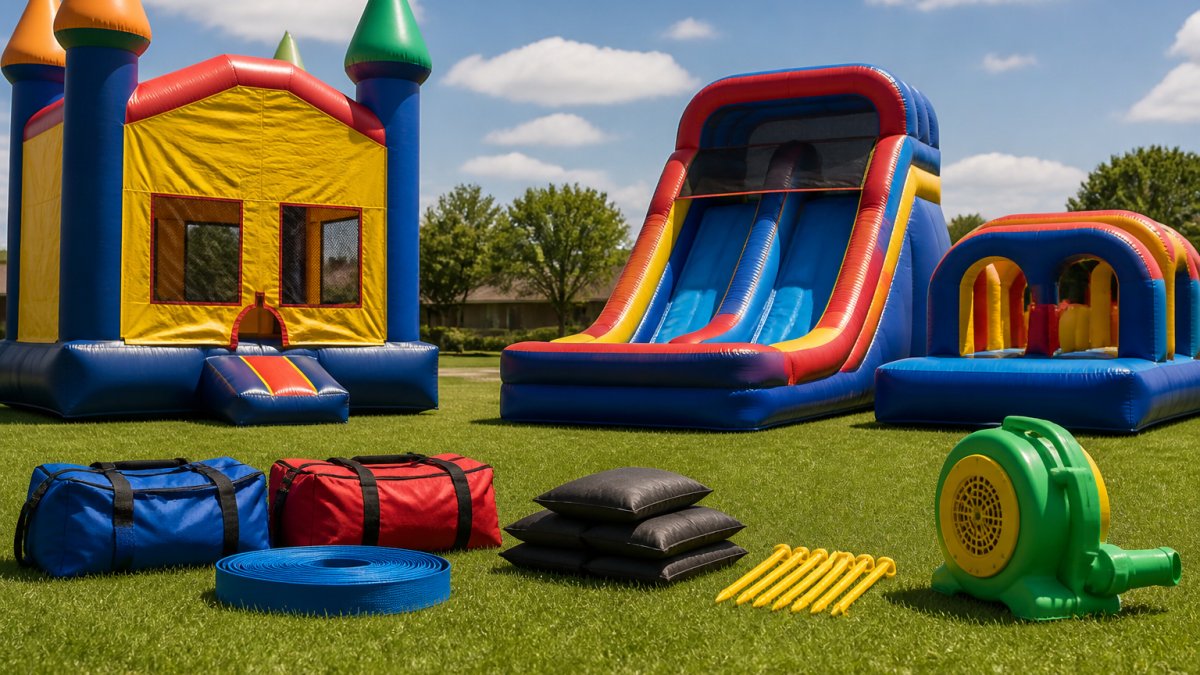
Bounce House Cleaning Supplies You'll Need
Before you start, gather the right tools. They should match the material you're cleaning, because a bounce house isn't one uniform surface.
Match Your Supplies to the Material
A typical inflatable combines several materials, each reacting differently to cleaners and tools.
Vinyl (the main jump surface and walls):
- Mild dish soap or a pH-neutral all-purpose cleaner
- Soft-bristled brush or microfiber cloth
- Warm water
PVC and coated fabrics (often used on commercial-grade units):
- Same mild soap approach as vinyl
- Avoid alcohol-based or solvent cleaners, which can dull the coating
- Skip abrasive pads entirely
Mesh netting (the see-through panels):
- A soft brush only, never a stiff one that snags threads
- Diluted soap solution applied with a spray bottle rather than poured
- Rinse gently, mesh traps soap and holds it against the fabric
Seams and stitching:
- A soft toothbrush or detailing brush reaches into the fold
- Keep water volume low here, seams are where moisture hides
Printed surfaces and graphics:
- Test any cleaner on a hidden corner first
- Avoid scrubbing printed areas hard, ink can lift or fade
- Vinegar solutions are generally safe on printed vinyl, but verify on a test spot
Sanitizer Selection and Safe Contact Times
Cleaning removes dirt; sanitizing reduces germs. They are not the same step, and the product matters as much as how long it stays wet.
What to look for on the label:
- An EPA registration number, which confirms the product is a registered disinfectant
- A stated contact time, the surface must stay visibly wet for that entire duration
- Directions for the surface type you're treating
Common contact times you'll see on labels:
- Many ready-to-use disinfectant sprays list 30 seconds to 10 minutes
- Quaternary ammonium products often list around 10 minutes
- Bleach solutions typically need several minutes of wet contact
Diluting bleach safely (when the manufacturer allows it):
- A common household ratio is roughly 1/3 cup of unscented bleach per gallon of water (the CDC)
- Mix fresh each time, diluted bleach loses potency within about 24 hours
- Never mix bleach with ammonia, vinegar, or other cleaners, the fumes are dangerous
Application tips:
- Spray or wipe evenly so the surface stays wet for the full contact time
- Don't let puddles sit in seams, wipe excess after the contact time passes
- Rinse or wipe away residue so it doesn't attract dirt or irritate skin
Tools to Avoid
- Pressure washers, the force drives water into seams and can tear stitching
- Abrasive scrubbers and steel wool, they scratch and dull the surface
- Solvent-based or alcohol-heavy cleaners on coated fabrics
- Stiff bristle brushes on mesh
Stick to gentle cleaners and soft tools, matching the tool to the surface so you clean without wearing down the material.
Step-by-Step: How Bounce Houses Are Cleaned
Cleaning a bounce house follows a simple process.
Step 1: Remove Loose Debris and Dirt
Start by removing everything loose. Grass, leaves, dirt, and dust should come off before you add any water or solution.
How to do it:
- Use a soft brush or cloth to sweep away loose dirt and grass
- Pay special attention to seams and crevices where debris collects
- A vacuum with a soft attachment works well for this step
- Remove any sticks, rocks, or foreign objects that could damage the vinyl
Step 2: Prepare Your Cleaning Solution
Standard solution:
- Fill a bucket with warm water
- Add a few drops of mild dish soap
- Stir gently to combine
Alternative solution for tougher jobs:
- Mix equal parts white vinegar and warm water
- This works well for stubborn stains and odor
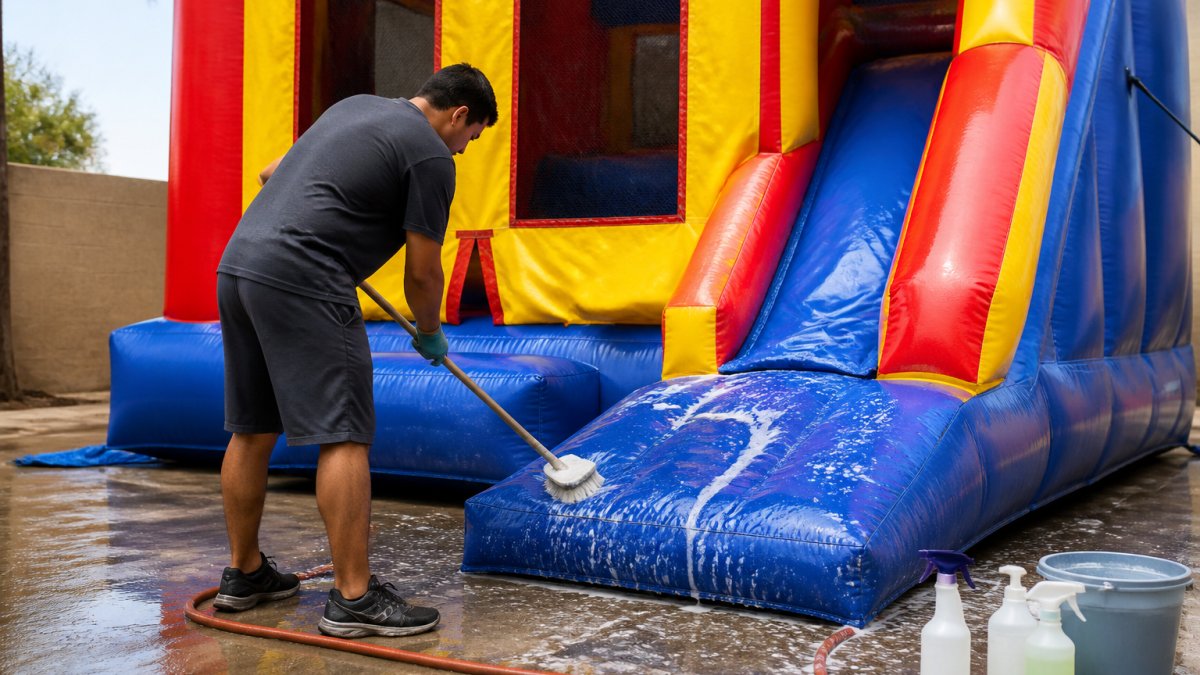
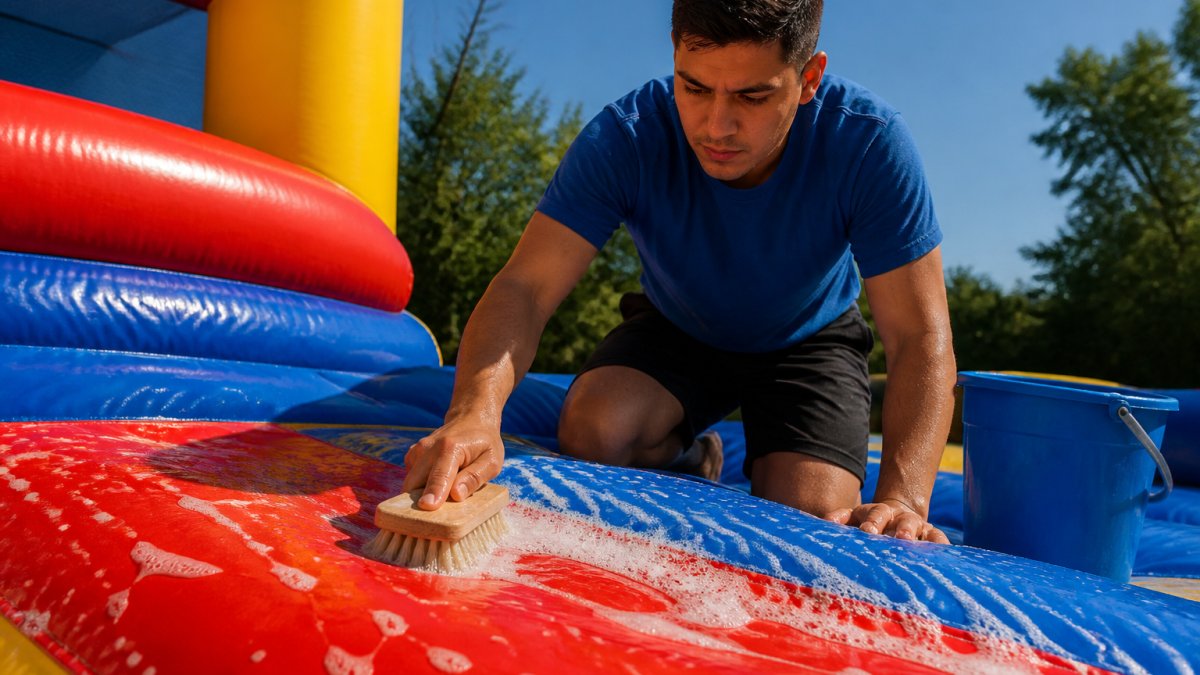
Step 3: Scrub the Inflatable Surface and Seams
Apply your cleaning solution and scrub gently, giving seams extra attention since that's where dirt hides.
Scrubbing technique:
- Use a soft brush or cloth with your cleaning solution
- Work in small sections, moving methodically across the surface
- Scrub seams gently but firmly, they collect the most grime
- Don't press hard enough to damage the vinyl
- Pay extra attention to areas where children's hands contact the surface most
Step 4: Spot-Clean Stains and Sticky Residue
For sticky residue:
- Apply your cleaning solution directly to the sticky area
- Let it sit for a minute to soften the residue
- Gently scrub with a soft cloth or sponge
- Repeat if needed
For grass or dirt stains:
- Use your vinegar and water mixture
- Apply, let sit briefly, then scrub gently
- These stains often come off with a little patience
Step 5: Rinse Thoroughly
Rinsing removes all soap residue. Leftover soap leaves a film and can make the surface slippery or sticky.
How to rinse:
- Use clean water in your spray bottle or hose
- Spray down the entire surface methodically
- Make sure all soap is gone, residue dulls the appearance
- Pay special attention to seams where cleaning solution collects
- Wipe with a clean cloth to remove excess water
How to Disinfect a Bounce House Between Rentals
Disinfection process:
- Clean the inflatable first using the steps above
- Apply a disinfectant spray according to product instructions
- Most disinfectants require a contact time, usually 30 seconds to 10 minutes (the EPA)
- Check your product's label for the exact time needed
- Wipe or spray away any excess disinfectant
- Allow to air dry completely before the next rental
Bounce House Cleaning Between Rentals and Illness Prevention
When you rent bounce houses frequently, a cleaning routine between rentals is non-negotiable.
Cleaning between rentals:
- Quick clean after each event (15-20 minutes)
- Full disinfection weekly or between high-risk rentals
- Visual inspection for damage or wear
- Document your cleaning in a maintenance log
When to prioritize disinfection:
- After a party with sick children
- Between back-to-back weekend rentals
- During cold and flu season
- If visible stains or soiling occurred
How to Dry a Bounce House Properly
Drying is as important as cleaning. Moisture left in seams or on the surface leads to mold, mildew, and odor, and a bounce house can look dry outside while holding water where you can't see.
Step-by-Step Drying
- After rinsing, wipe the entire surface with clean, dry microfiber towels
- Work top to bottom so water doesn't run back onto areas you already dried
- Pay special attention to seams, folds, and the base where water pools
- Leave the inflatable fully inflated in the sun for 1 to 2 hours if possible
- Ensure complete drying before deflating and storing
For faster drying:
- Position the bounce house in direct sunlight
- Ensure good air circulation around all sides
- Run a box fan or two across the surface, moving air dries seams faster than still air
- In humid conditions, allow extra time and consider running the blower longer to push air through the interior
Verify Hidden Moisture Before You Pack
This is the step most people skip, and it's why mildew comes back. Surface feel isn't reliable, so use these checks instead.
Seam and fold check:
- Press a dry paper towel firmly into each seam and fold, if it comes away damp, keep drying
- Run your hand along the underside of seams, that's where water clings
Interior chamber check:
- With the blower still running, feel the air coming out of the seams, if it feels humid or cool-wet, moisture is still inside
- Let the blower run an extra 15 to 30 minutes after the surface feels dry
Base and corner check:
- Lift the corners and base flaps, water collects underneath and won't evaporate in place
- Wipe these areas separately even if the rest of the unit is dry
The fold test:
- Fold a small section of the inflatable in half and hold it for a few seconds
- Open it and feel the inside of the fold, if it's cool or clammy, it's not dry yet
Storing Only After It Passes
- Never deflate and store a bounce house while it's still damp
- Once it passes the checks above, deflate and fold loosely rather than tightly
- Store in a dry location with some air circulation, not a sealed plastic bin in a humid garage
- If you must store in a humid space, add a moisture absorber packet inside the storage bag
Troubleshooting Stubborn Stains, Mildew, and Odors
Even with regular cleaning, tough problems can develop. Here's how to handle the most common issues.
Mildew or mold:
- Mix equal parts white vinegar and water
- Spray the affected area and let sit for 10-15 minutes
- Scrub gently with a soft brush
- Rinse thoroughly and dry completely
- Prevention is easier than cure, don't store damp inflatables
Persistent odors:
- Often caused by trapped moisture or mold
- Clean thoroughly, then spray with vinegar solution
- Air dry completely in sunlight
- Store in a dry location with air circulation
- If odor persists, the inflatable may need professional cleaning
Stubborn stains:
- Identify the stain type (grass, food, dirt, etc.)
- Grass stains: vinegar solution usually works
- Food or drink stains: mild soap and patient scrubbing
- Rust stains: white vinegar applied directly
- Never use bleach on colored vinyl, it causes discoloration
Cleaning Frequency and Maintenance Records
Cleaning frequency:
- After every event: Quick sweep and rinse (15-20 minutes)
- Weekly if rented multiple times: Full cleaning with disinfection
- Monthly: Deep inspection for damage or wear
- Seasonally: Full deep clean and maintenance check
Maintenance record template:
| Date | Event/Rental | Cleaning Type | Notes | Next Service |
|---|---|---|---|---|
| 10/12/2026 | Birthday party (8 kids) | Quick clean + rinse | No visible stains | 10/19/2026 |
| 10/19/2026 | Backyard gathering | Full clean + disinfect | Mild soap solution | 11/02/2026 |
| 11/02/2026 | Family event | Quick clean | Spot cleaning needed on seam | 11/09/2026 |
Keeping a bounce house clean isn't complicated, but it requires consistency: remove debris, apply mild soap, scrub gently, rinse thoroughly, and dry completely. At Lil Bubs Bounce House, we follow this process religiously because clean equipment means happy, healthy children at every party. When you book with us, you're getting inflatables that have been cleaned, disinfected, and properly maintained, so you can focus on the celebration. Ready to plan a stress-free party?
Frequently Asked Questions
How do professionals clean bounce houses between rentals?
Professional cleaning starts with removing all loose debris, then washing the entire inflatable surface with mild soap and water. The vinyl and mesh are scrubbed with soft brushes, seams are cleaned thoroughly, and any stains or sticky residue are spot-treated. The inflatable is rinsed completely, sanitized if needed, and air-dried fully before storage or the next rental to prevent mold and odors.
What's the best way to disinfect a bounce house?
After the standard cleaning process, use a disinfectant spray on high-touch areas and seams. Allow the disinfectant to contact the surface for the time recommended on the product label. Rinse thoroughly with clean water to remove all chemical residue before the inflatable is used again.
How long does it take to dry a bounce house completely?
Never store a bounce house until it's completely dry to avoid mold and mildew growth.
Can you use bleach to clean a bounce house?
Bleach can be used for disinfection but must be thoroughly rinsed away. For routine cleaning, mild dish soap and water are safer and more than adequate. Reserve bleach solutions for sanitizing between rentals or after illness.