 blog
Blow Up Rentals: A Complete Guide to Choosing and Booking
Table of Contents
- What Are Blow Up Rentals and What Types Are Available
- Understanding Bounce House Rental Cost and What Affects Pricing
- Bounce House Rental Duration: How Long Can You Rent
- Water Slide Rentals: Options and Setup Considerations
- Bounce House Rental Checklist: What to Verify Before Booking
- How to Choose the Right Blow Up Rental for Your Event
- The Booking Process: From Online Reservation to Event Day
- Frequently Asked Questions
Last Updated: October 18, 2026
What Are Blow Up Rentals and What Types Are Available
Blow up rentals are inflatable play structures for parties, events, and celebrations. They range from simple bounce houses to elaborate water slides and obstacle courses, each suited to different age groups and event sizes.
Bounce Houses and Inflatable Play Areas
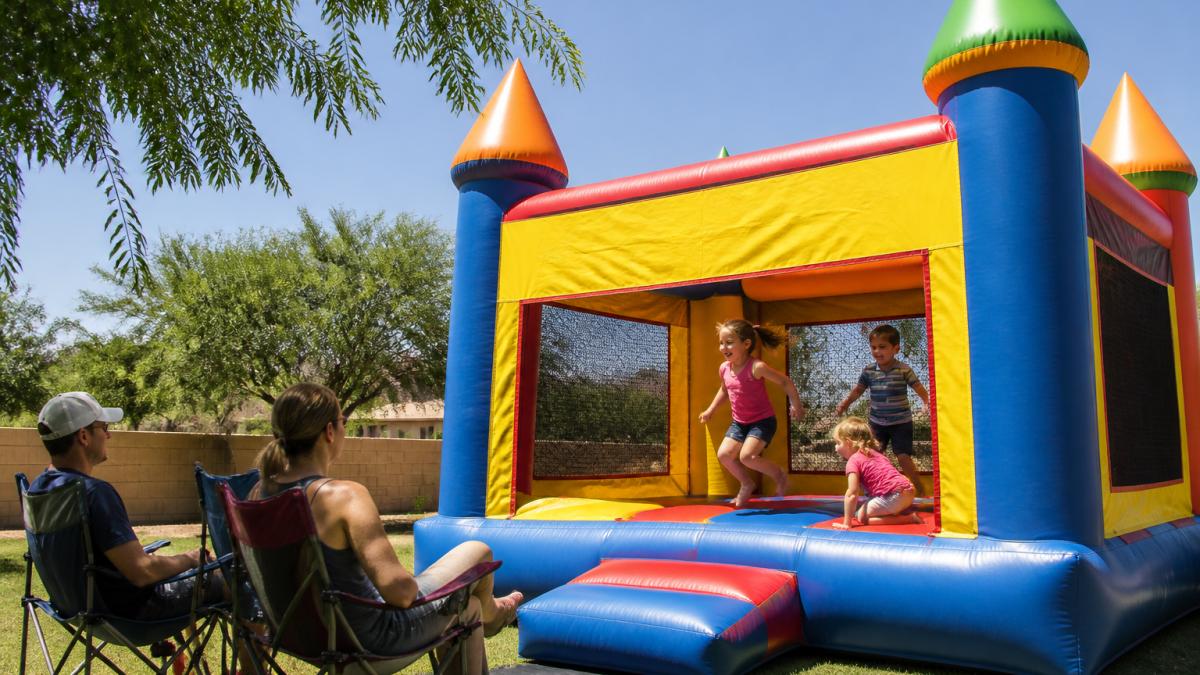
Bounce houses remain the most popular blow up rentals for children's parties. These safe, enclosed spaces let kids jump, climb, and explore, and most accommodate multiple children at once.
Inflatable play areas include combo units that integrate slides, climbing walls, and ball pits into one structure, keeping children engaged longer and simplifying party planning.
Water Slides and Wet Play Equipment
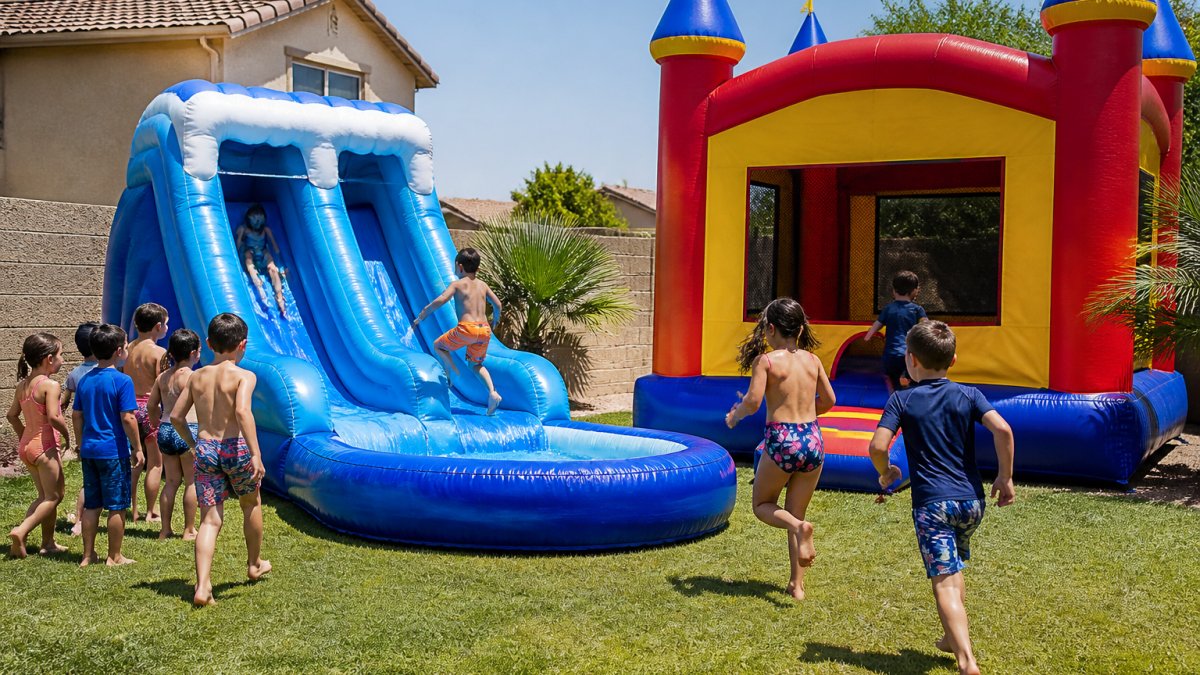
Water slides add a refreshing element to summer celebrations. Wet slides feature smooth surfaces and splash pools at the base, while dry slides work year-round without water.
The choice depends on your event date, space, and guest preferences. Wet blow up rentals are most popular in warmer months and require drainage and space for water containment.
Obstacle Courses and Interactive Games
Inflatable obstacle courses challenge guests with climbing, crawling, and jumping elements in sequence, encouraging friendly competition and engaging older children and adults.
Interactive games range from simple inflatables to elaborate combos with multiple challenge stations. Many families choose obstacle courses for mixed-age parties because they accommodate various skill levels.
Understanding Bounce House Rental Cost and What Affects Pricing
Most rental-company pages for blow up rentals list a starting price and stop there. This section explains the cost structure behind a quote so you can compare providers line by line.
The Five Line Items in Almost Every Quote
A transparent inflatable rental quote usually breaks into five parts. Ask every provider to itemize them, because bundled quotes hide the differences that matter.
- Base rental rate. The price for the inflatable itself for a defined rental window. This is the number most landing pages advertise, and rarely the number you pay.
- Delivery fee. Usually charged by distance from the provider's warehouse, often with a free-delivery radius and a per-mile charge beyond it. Ask whether it is flat or distance-based, and whether stairs, gates, or long carries change it.
- Setup and takedown. Some providers include this in the base rate; others charge separately. Confirm whether the crew handles full setup, anchoring, and inflation, or whether you are expected to help.
- Attendant or supervision fee. For larger obstacle courses, water slides, and combo units, some providers require or offer a trained attendant at an hourly rate, common for mixed-age crowds.
- Add-ons and taxes. Tables, chairs, canopies, generators, concessions, and sales tax. Sales tax treatment for rental equipment varies by state, so confirm whether the quote includes it.
What Actually Moves the Price Up or Down
Beyond the line items, five variables drive the total and let you predict a quote before you request one.
- Unit size and feature count. A basic bounce house sits at the low end; a combo unit with a slide, climbing wall, and ball pit sits higher; multi-lane water slides and obstacle courses sit at the top. Feature count, not brand, is the main driver.
- Rental duration. Most providers price in blocks (for example, 4-hour, 6-hour, or full-day windows). Weekend and holiday dates often carry a premium or minimum duration. Overnight and multi-day rentals are usually priced as a multiple of the daily rate.
- Season and date. Late spring through early fall is peak season in most markets, and graduation and end-of-school dates book out first. Off-season and weekday bookings are where negotiating room usually exists.
How to Compare Two Quotes Fairly
Put both quotes side by side and normalize them before you decide. The comparison that matters is cost per hour of usable rental time, not the headline daily rate.
| What to compare | Why it changes the math |
|---|---|
| Rental window length | A 4-hour window at one rate can cost more per hour than a 6-hour window at a slightly higher rate |
| Delivery included or extra | A low base rate with a separate delivery fee can exceed a higher all-in rate |
| Setup and takedown included | Confirm the crew does both, and whether takedown happens the same day or the next morning |
| Attendant required | A required attendant can add a meaningful hourly cost to large units |
| Deposit and cancellation terms | A refundable deposit and a weather-friendly cancellation policy have real value |
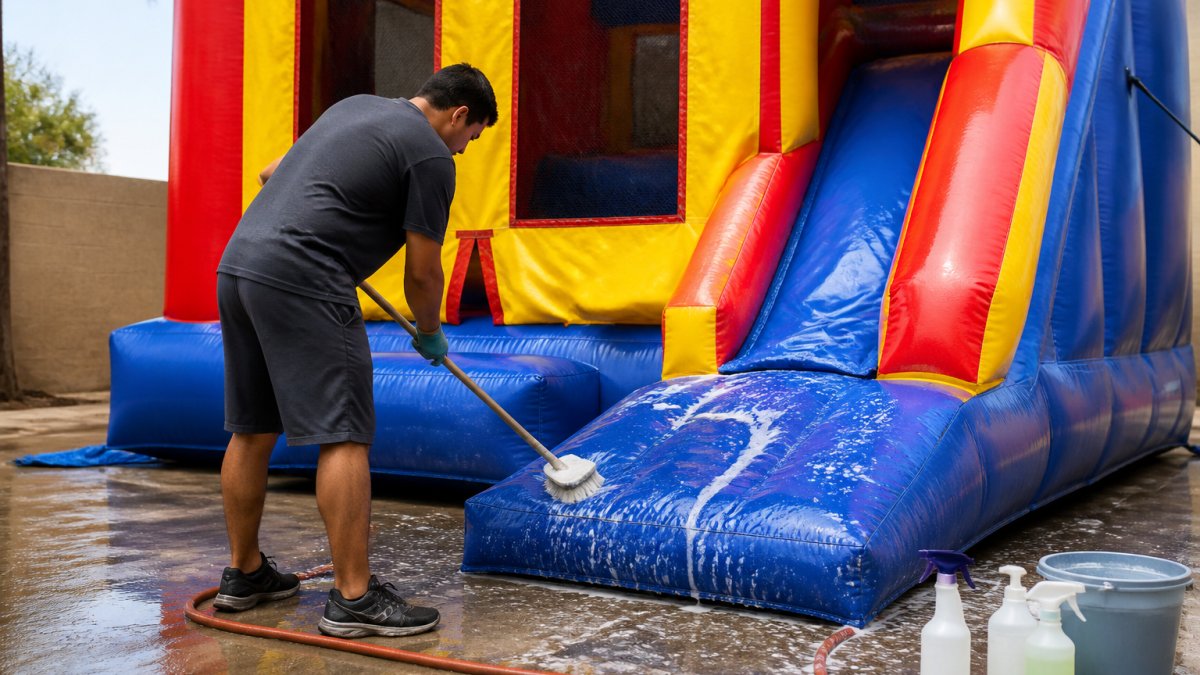
| Cleaning and inspection claims | Ask what is actually done between rentals, not just whether the unit is "sanitized" |
Getting a Quote That You Can Actually Use
The first quote is a starting point, not a final number. Confirm in writing what happens if the crew arrives and the site does not match what you described, and whether there is a trip charge. That question separates providers who quote carefully from those who quote quickly.
Bounce House Rental Duration: How Long Can You Rent
Bounce house rental duration typically ranges from a few hours to full-day bookings. Most birthday parties rent inflatables for 4-6 hours, enough time for setup, guest enjoyment, and takedown.
Weekend bookings often have minimum durations, while weekday rentals may offer more flexibility. Some providers accommodate overnight rentals for special events.
Water Slide Rentals: Options and Setup Considerations
Water slide rentals bring interactive fun to summer celebrations, ranging from compact slides for smaller yards to elaborate multi-lane structures for larger events. Choosing between dry and wet slides depends on your event goals, weather, and available space.
Dry Slides vs. Wet Slides for Your Event
Dry slides work year-round without water or drainage infrastructure, suiting cooler months, indoor venues, or situations where water isn't practical.
Wet slides create a splash-filled experience perfect for summer parties, requiring a water source, drainage plan, and enough space for a splash pool. Kids love the combination of speed and cooling off.
Space and Safety Requirements
Water slide rentals demand adequate ground space and level terrain for proper installation, and the landing area needs sufficient depth for the splash pool.
Safety considerations include proper water drainage, slip-resistant surfaces, and adequate supervision space. Professional installation ensures all safety features function correctly and the structure remains stable.
Bounce House Rental Checklist: What to Verify Before Booking
Most rental pages mention safety in a sentence and move on. This checklist is built to be used on the phone or in an email before you pay a deposit, covering inspection and anchoring questions, supervision and weather rules, and the policy terms that decide who pays when something goes wrong.
Safety, Inspection, and Anchoring Questions
Inflatable safety in the United States is governed by a mix of state and local rules, industry standards, and the provider's own practices. There is no single federal inspection certificate for every bounce house, so the questions below verify a provider's practices directly.
- Inspection schedule. Ask how often units are inspected, who performs the inspection, and whether inspection records are available. A provider that inspects before every setup and keeps a written log is a stronger signal than one that says units are "regularly inspected."
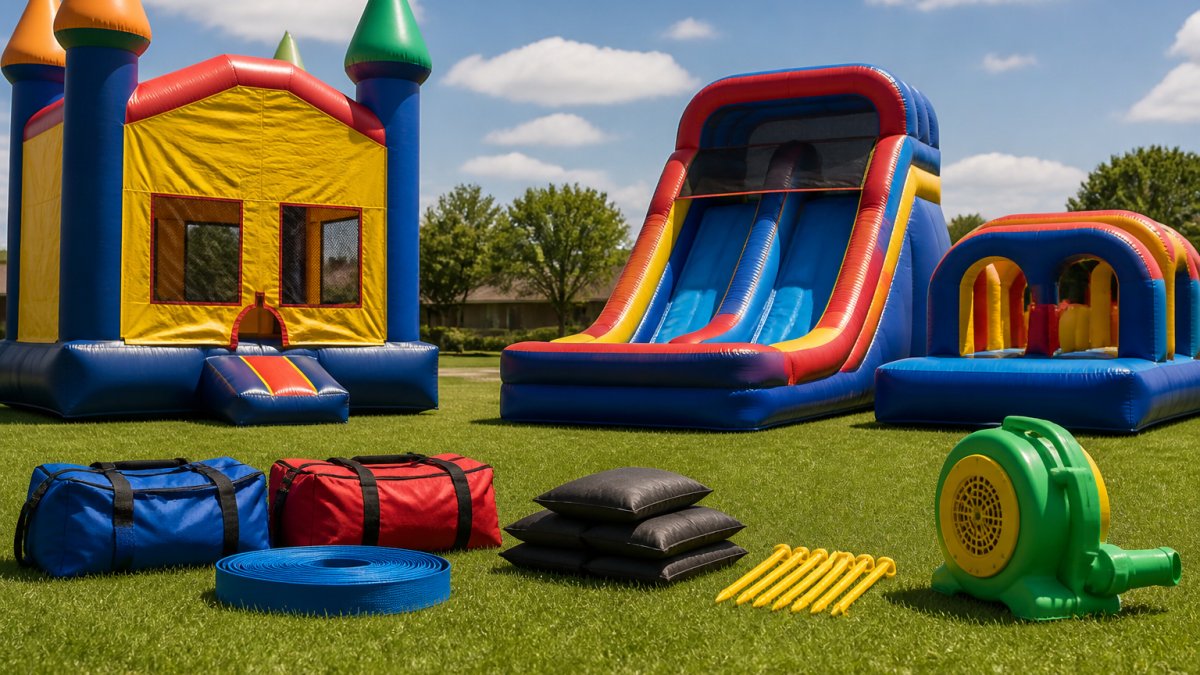
- Anchoring method. Ask what the crew uses to secure the unit: ground stakes for grass, sandbags or weighted anchors for pavement and artificial turf, and how many anchor points per unit. Confirm the crew will not set up on a surface where the unit cannot be properly anchored.
- Wind policy. Ask for the provider's wind threshold and what happens if wind picks up during the event. A common practice is to deflate the unit when sustained wind reaches a set threshold, and a reputable provider will state that threshold and put it in writing.
Delivery, Setup, and Cancellation Policy Terms to Confirm
Policy terms are where quotes differ most and where disputes happen. Get these in writing before you pay.
- Delivery window. Confirm the arrival window, not just the date, and ask what happens if the crew is delayed. Ask whether setup happens before your event start time or during it.
- Setup access requirements. Confirm the minimum gate width, whether stairs or slopes are acceptable, and whether the crew needs vehicle access to the setup area. Ask about the trip charge if the site does not match what you described.
- Power and water requirements. Confirm the outlet distance, whether an extension cord is provided, and for wet slides, who supplies the hose and where the water drains.
A Quick Pre-Booking Verification Script
Use these questions in one email or call. The answers tell you more than any landing page.
- How often are units inspected, and can I see the inspection log for the unit I am renting?
- How will you anchor the unit on my surface, and what is your wind threshold?
- What are the age, weight, and occupancy limits, and how do you recommend supervising mixed-age groups?
- What is the delivery window, and what is the trip charge if the site does not match my description?
- What are the deposit, cancellation, reschedule, and damage terms in writing?
A provider who answers all five clearly and in writing is the one to book. A provider who deflects or answers vaguely is telling you what the event-day experience will be like.
How to Choose the Right Blow Up Rental for Your Event
Selecting the right blow up rental requires matching the inflatable to your guests' ages, party size, and available space. The wrong choice can disappoint guests or create logistical problems on event day.
Matching Age Groups and Party Size
Younger children (ages 4-6) enjoy simple bounce houses with gentle features. As children age, they seek more challenge through obstacle courses and interactive games.
Party size determines the inflatable's capacity. Small gatherings work well with compact bounce houses, while larger celebrations need structures accommodating multiple children simultaneously.
Assessing Your Space and Weather Conditions
Measure your available area carefully, accounting for safety clearances around the inflatable. Most blow up rentals require level ground and protection from overhead hazards like tree branches or power lines.
Weather planning matters significantly. Summer events benefit from water slide rentals, while fall or spring parties might favor dry inflatables.
The Booking Process: From Online Reservation to Event Day
Booking blow up rentals through Lil Bubs Bounce House is straightforward and stress-free. Our online system lets you check availability, select your inflatable, and confirm details.
Checking Availability and Confirming Your Reservation
Start by browsing available blow up rentals and selecting your preferred date and inflatable type. Our online reservation system shows real-time availability, allowing you to book immediately when you find what works.
Review all confirmation details carefully. Verify the inflatable type, rental duration, delivery address, and any additional services you've selected.
What Happens on Delivery and Setup Day
Our team arrives within your scheduled delivery window with your selected blow up rentals.
On pickup day, we return to deflate, pack up, and remove the equipment.
Choosing the right blow up rentals transforms any celebration into an unforgettable experience. The decision involves balancing your guests' ages, available space, weather conditions, and budget.
Frequently Asked Questions
What should you check before booking a bounce house rental?
Before booking, verify that the rental company inspects and sanitizes equipment between events, confirm delivery and setup are included in your quote, check their cancellation and rain policies, and ask to see real photos of the specific inflatables you're renting. Request references or customer reviews to confirm reliability.
How much does it cost to rent a bounce house?
Bounce house rental pricing depends on equipment type, rental duration, delivery distance, setup complexity, and whether you add extras like tables, canopies, or concessions. Pricing also varies by season and event date availability. Contact rental providers directly for current quotes tailored to your specific event. Most companies offer flexible pricing for half-day or full-day rentals, so discuss your timeline when requesting a quote.
How long can you rent a bounce house for?
Bounce house rental duration typically ranges from a few hours (usually 4-6 hours for standard party packages) to full-day or overnight rentals. Many rental companies offer half-day and full-day options, with discounted rates for longer rentals. Some providers also accommodate multi-day rentals for special events. Ask your rental company about their standard rental periods and whether they offer flexible scheduling for your specific needs.
How far in advance should you book an inflatable rental?
Booking 2-4 weeks in advance is recommended for most events, especially during peak season (spring and summer). Popular dates and larger equipment may require booking earlier. However, many rental companies hold last-minute availability, so contact them directly if you need a rental on short notice. Booking early ensures your preferred equipment is available and gives you time to coordinate delivery and setup details.