 ultimate-guide
Best Equipment for Birthdays & Special Events: 2026 Guide
Table of Contents
- Essential Equipment Categories for Birthdays and Special Events
- Party Rental Checklist: What You Actually Need
- Party Rental Delivery and Setup: Timeline and Logistics
- Bounce House Setup Requirements and Safety Standards
- Event Rental Delivery Schedule: Planning Ahead
- Quality and Safety Inspection Checklist
- Cost-Effective Planning for Equipment Rentals
- Frequently Asked Questions
Last Updated: October 21, 2026
Essential Equipment Categories for Birthdays and Special Events
The right equipment makes the difference between chaos and celebration. Choosing the best high-quality equipment for birthdays special events requires knowing what categories exist and how they fit together.
The core categories are inflatables and play structures, seating and tables, weather protection, audio-visual systems, and food-service equipment. Inflatables keep kids engaged, tables and chairs provide comfort, tents shield guests from sun and rain, and concession equipment turns a gathering into a full celebration.
Inflatables and Play Structures
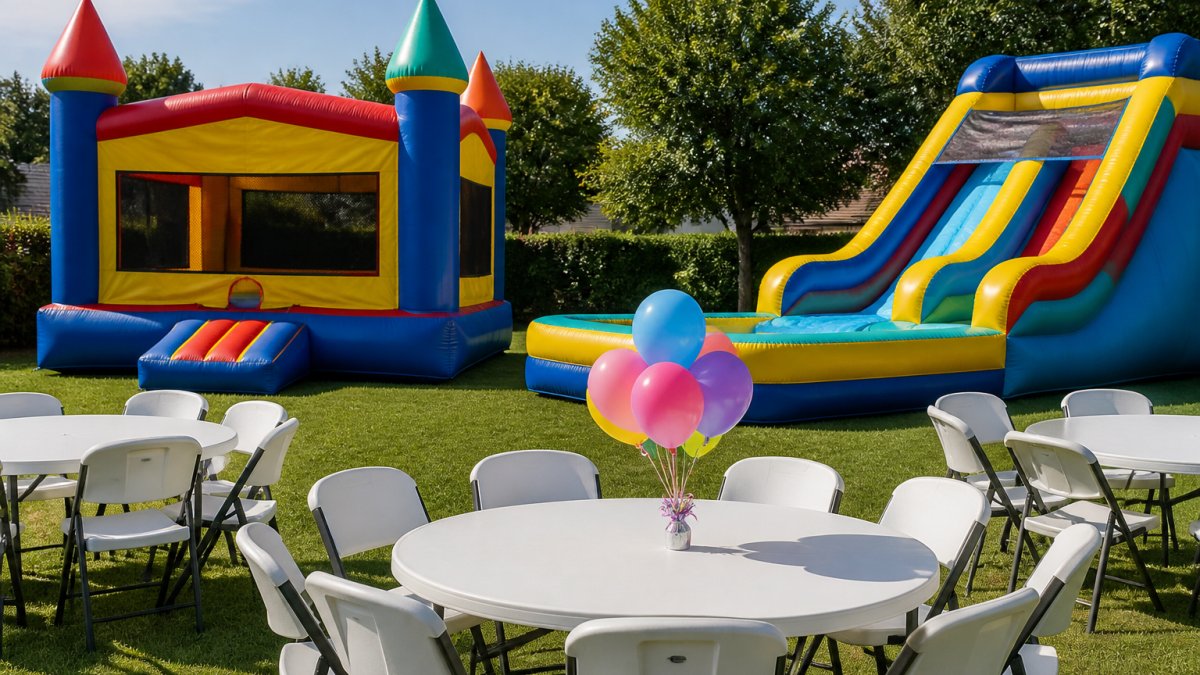
Bounce houses, water slides, and obstacle courses form the centerpiece of most children's parties.
The best choice depends on age range, available space, and theme. Smaller inflatables (13×13) suit 8-12 children; larger units (20×20 feet or bigger) accommodate 20-30 kids.
Quality matters most here. A well-maintained inflatable has reinforced seams, durable vinyl, and secure anchoring points; poor-quality units deflate mid-party or create safety hazards. On arrival, inspect seams for tears, test the blower, and verify safety features.
Tables, Chairs, and Seating Arrangements
Seating often gets overlooked until guests have nowhere to sit. Tables and chairs serve as dining surfaces, gift stations, cake displays, and resting spots for parents.
Standard options include 6-foot rectangular tables, round tables for 8-10 people, and folding chairs. For children's parties, add kid-sized tables and chairs alongside adult seating. Plan one table per 6 - 8 guests, plus extra tables for food and gifts; linens upgrade the look and protect against spills.
Arrangement matters as much as quantity. Clustered seating creates conversation areas, linear arrangements suit formal events, and U-shaped setups encourage interaction around a focal point.
Tents, Canopies, and Weather Protection
A tent transforms an outdoor party from weather-dependent to weather-proof. A 10x20-foot tent covers roughly 200 square feet and accommodates 30 standing guests or 16-20 seated guests.
Canopies offer lighter-weight partial shade; a 10×10 canopy covers a food table or gift area without shading the whole event. Peak-season tent availability drops in spring and early summer, so book 4-6 weeks ahead.
Tent setup requires stable ground, proper anchoring, and clearance from overhead obstacles like branches and power lines. Wet ground demands additional stakes or weight distribution, which professional crews handle.
Party Rental Checklist: What You Actually Need
Most parents overestimate what they need and underestimate logistics. A focused list prevents waste and keeps your budget realistic.
Equipment Selection by Age Group and Guest Count
The equipment that delights 5-year-olds bores 8-year-olds. A simple bounce house works for preschoolers. A bounce house plus obstacle course engages elementary-school kids. Teenagers want interactive challenges or lawn games rather than inflatables.
Guest count drives scale. A party for 10 kids needs one small inflatable and basic seating; 30 kids require larger inflatables, multiple seating areas, and food-service capacity. Underestimating creates bottlenecks at food stations.
Build your checklist by starting with age-appropriate inflatables, adding seating for all guests plus 20 percent extra, then weather protection, sound equipment if needed, and concessions.
Matching Equipment to Your Venue and Theme
Your venue constrains and enables choices. A small backyard fits a single bounce house and canopy; a large park accommodates several activity stations, multiple tents, and elaborate food setups.
Theme alignment makes the party memorable. A superhero party pairs with obstacle courses, a princess party with elegant seating and a photo backdrop, and a sports party with competitive games and scoreboard displays. Equipment should reinforce the theme, not fight it.
Venue logistics matter too: power access for sound and concession machines, water for the water slide, shade trees affecting tent placement, and vendor vehicle access.
Party Rental Delivery and Setup: Timeline and Logistics
Delivery and setup cause more party-day stress than any other factor. A clear timeline prevents surprises.
Understanding Delivery Windows and Scheduling
Most rental companies offer 2-4 hour delivery windows rather than specific times. A "9 AM to 1 PM" window means the crew arrives sometime in that range, so have someone present to direct placement and verify condition.
Most parties benefit from delivery 1-2 hours before guests arrive, leaving time to verify equipment, brief kids on safety rules, and handle last-minute issues.
Setup duration varies by complexity: a single bounce house and canopy takes 30-45 minutes; multiple inflatables, tables, chairs, and concession equipment takes 60-90 minutes. Budget time for the crew to explain operation and walk through safety procedures.
Preparing Your Space for Delivery Day
Clear the delivery area completely, remove toys, garden tools, and decorations. Mark underground utilities or sprinkler lines, compact soft ground, and expect additional anchoring on wet ground.
Arrange parking for the delivery vehicle; most equipment trucks are 20-30 feet long and need clear backyard access. A blocked driveway delays setup. Plan where inflatables, tables, and the food station will go.
Brief your family on the delivery schedule and keep kids supervised away from the setup zone. Have water available for the crew, setup is physically demanding, and a hydrated crew works faster and safer.
Bounce House Setup Requirements and Safety Standards
Bounce house safety depends on proper installation and ongoing monitoring during the event.
Space and Ground Requirements
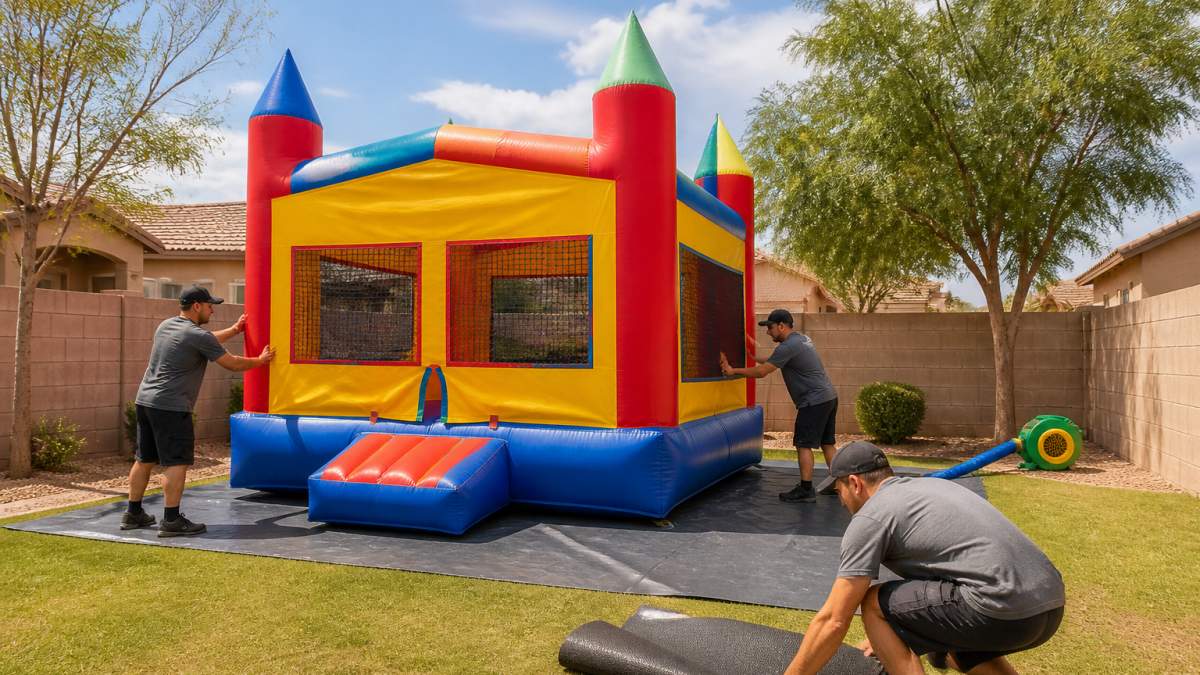
A bounce house needs a level, clear surface free of sticks, sharp objects and pet droppings. Grass works well, though most companies can set up on turf, Concrete or asphalt and round landscape rock.
Ground stability matters enormously. Soft, wet, or sloped ground can cause the inflatable to shift during use. Sand and loose soil provide poor anchoring. Compacted earth or grass over firm soil works best.
Slope tolerance is limited. More than a 5-degree slope causes uneven weight distribution and creates safety hazards. If your yard slopes significantly, the crew may refuse to set up or require additional stabilization.
Power, Water, and Access Needs
Every bounce house requires a continuous power source for the blower. An extension cord rated for outdoor use connects the blower to a nearby outlet.
Water slides need a water source and drainage system. A garden hose provides water. The slide requires a slope to drain water away from the inflatable base and away from guest areas.
Vehicle access determines delivery feasibility. The rental truck needs a clear path to the backyard. Narrow gates, low-hanging wires, or tight corners may prevent delivery to your desired spot, so discuss access constraints when booking.
Event Rental Delivery Schedule: Planning Ahead
Booking windows and availability determine what equipment you can actually secure.
Peak season for equipment rentals runs from April through August. Spring and early summer weekends book up 6-8 weeks in advance.
Off-season (September through March) offers more flexibility. Late fall and winter parties typically book with 2-4 weeks notice, availability expands, and some companies offer discounts.
Last-minute bookings (less than 2 weeks out) are possible but risky.
Lil Bubs Bounce House maintains a diverse inventory specifically to handle both planned and last-minute requests.
Quality and Safety Inspection Checklist
Equipment condition directly affects guest safety and your peace of mind. A systematic inspection takes 10 minutes and catches problems before they become issues.
What to Look for When Equipment Arrives
When the delivery crew finishes setup, walk through this checklist before they leave:
Inflatables: Check for visible tears, holes, or punctures in the vinyl. Inspect seams where panels connect. Verify the blower runs continuously and the inflatable stays pressurized. Test the entrance and exit to ensure they're secure. Confirm all safety features (padding, railings, barriers) are in place and intact.
Seating: Inspect chairs for cracks, breaks, or loose parts. Test table stability by pushing from multiple angles.
Tents and canopies: Confirm all poles are secure and the structure is level. Test guy-lines and stakes for tension.
Sound equipment: Test microphones, speakers, and connections. Verify volume levels work at the back of your space.
Concession equipment: For cotton candy, snow cone, popcorn, or hot dog machines, verify they power on, reach operating temperature, and have all necessary supplies.
Document any damage or concerns immediately.
Sanitization and Cleanliness Standards
Ask the rental company about their sanitization process. Inflatables should be cleaned between rentals. Seating should be wiped down. Concession equipment should be sanitized.
Many companies use hospital-grade disinfectants and allow surfaces to air dry between uses; some use UV sanitization. Ask what process they follow and when the last cleaning occurred.
For inflatables, seams and crevices trap dirt. Ask if they use pressure washing or hand-cleaning.
If you have immunocompromised guests or health concerns, mention this when booking. The rental company may use additional sanitization steps or provide freshly cleaned equipment as priority.
Cost-Effective Planning for Equipment Rentals
Understanding what drives rental costs helps you make smarter choices.
Understanding What Drives Rental Pricing
Equipment rental pricing depends on equipment type and size, rental duration (typically 4-6 hours for parties), delivery distance, setup complexity, and seasonal demand.
Seasonal pricing fluctuates. Peak season (May-July) carries premium rates. Off-season (November-February) offers discounts. Mid-shoulder months (April, August, September) fall in between. Booking an off-season date can reduce your total cost by 20-30 percent compared to peak season.
Setup and teardown labor is included in most quotes, but complications increase costs. A difficult access route, problematic ground conditions, or last-minute changes may trigger additional fees.
Bundling Equipment for Better Value
Bundling multiple items from the same rental company typically costs less than renting from multiple vendors.
Compare bundled packages against individual rentals.
Longer rental durations sometimes qualify for discounts. A 6-hour rental might cost only slightly more than a 4-hour rental.
Loyalty discounts apply if you've rented from the same company before. Referral discounts apply if you recommend them to friends.
Lil Bubs Bounce House specializes in exactly this combination. We maintain safe, clean inflatables including bounce houses, water slides, and obstacle courses.
Frequently Asked Questions
What equipment should I rent for a birthday party for 6-year-olds?
For children aged 6, prioritize age-appropriate inflatables like standard bounce houses or obstacle courses designed for that age range. Add tables and chairs for snacks, a canopy for shade, and consider concession equipment like a popcorn or snow cone machine. The specific mix depends on your guest count and venue size. Consult with your rental supplier about equipment recommendations for your child's age group and party theme.
How far in advance should I book party rental equipment?
Booking 2-4 weeks ahead is ideal for most events, allowing you to secure your preferred equipment and delivery date. During peak seasons or for larger celebrations, booking earlier improves availability. Last-minute bookings are sometimes possible but may limit your equipment options. Contact your rental provider about current availability and their booking windows.
What should I ask a party rental company before booking?
Ask about delivery and setup timelines, included services, sanitization processes between rentals, equipment quality inspection procedures, cancellation policies, and what happens if equipment fails during your event. Request information about space requirements for each item, power and water needs, and whether they provide real photos of the actual equipment you'll receive. Clarify all costs upfront to avoid surprises.
How does delivery and setup work for bounce house rentals?
Rental companies typically deliver equipment within a scheduled window, set up all items according to safety requirements, and return for pickup at an agreed time. Setup usually takes 30-60 minutes depending on complexity. Most providers handle full assembly and safety checks. Confirm the exact delivery time, setup duration, and pickup procedures before your event date.
How much space do I need for a bounce house and its setup?
A standard bounce house requires at least 15 feet by 15 feet of clear, level ground, with additional space for canopies, tables, and guest movement. Larger inflatables or obstacle courses may need 20+ feet in one direction. Ensure adequate clearance from fences, trees, power lines, and structures. Your rental provider can assess your specific venue and recommend the right equipment size.
What makes equipment rentals worth the cost compared to buying?
Rental equipment offers professional-grade quality, sanitization between uses, delivery and setup services, and eliminates storage costs. You pay only for what you need for one event rather than investing in items used occasionally. Rental companies maintain equipment to safety standards and handle all logistics, reducing your planning stress and ensuring reliable performance on event day.